
You’ve spent weeks—maybe even months—pouring your expertise into a course that you know can change lives. But now that it’s finished, you’re facing a new, even more exhausting challenge: the “ghost town” effect.
There is nothing more frustrating than launching a high-quality course only to be met with total silence because you don’t have a massive marketing budget or a pre-existing following.
Many course creators in similar situations start off by launching their course on a marketplace. When you launch your course on a marketplace, you get a partner that handles the heavy lifting: the hosting, the payments, and, most importantly, the traffic. So, you can focus on providing a one-of-a-kind course experience that your students never forget.
In this guide, we’re going to look at the best marketplaces to sell courses online.
TL;DR
- The best marketplace to sell online courses is Udemy. It remains the king of volume, though organic revenue shares have tightened.
- Skillshare and Domestika are your best bets for design and arts.
- Pluralsight, Eduonix, and BitDegree offer specialized audiences and unique “learn-and-earn” models for tech experts.
- Maven is the go-to for live, community-driven courses with premium pricing.
- Coursera and edX are best if you have institutional partnerships and have introduced new platform fees.
- OpenSesame and Tutorialspoint provide direct access to B2B and technical learners.
- If you want zero commissions and total brand control, skip the marketplaces and launch your own academy with Klasio.
Top Marketplaces to Sell Online Courses: Key Overview
| Marketplace Name | Best For | Commission Rate / Revenue Share |
| Udemy | Reaching a massive global audience without a following | 3% (Instructor Promo), 63% (Organic), 85% (Udemy Business) |
| Skillshare | Creative skills (design, arts) and community engagement | Royalty pool based on minutes watched (requires 50+ followers) |
| Domestika | High-production, curated creative courses for professionals | Advance fee + royalties (instructors don’t set prices) |
| Eduonix | Technical and professional skills with multiple sales channels | 5% (Instructor Promo), 50% (Organic), 75% (Paid Ads) |
| BitDegree | Web3, blockchain, and gamified “learn-and-earn” content | 1% (Instructor Promo), 75% (BitDegree Ad Enrollment) |
| Tutorialspoint | Technical tutorials and high-intent technical learners | 50% (after deductions for affiliation and gateway fees) |
| OpenSesame | B2B and corporate training for large organizations | Not publicly disclosed (typically volume-based partnerships) |
| Coursera | Academic prestige and institutional partnerships | 15% Platform Fee (starting 2026) + existing partner splits |
| edX | University-level courses and open-access academic content | Institutional revenue sharing (not for individual instructors) |
| Maven | High-ticket, live cohort-based courses and community | 10% Platform Fee on all sales |
| Pluralsight | Deep-tech skills and enterprise-level technical training | Upfront fee + viewership-based residual royalties |
Now, let’s get to know more about these course marketplaces.
01. Udemy
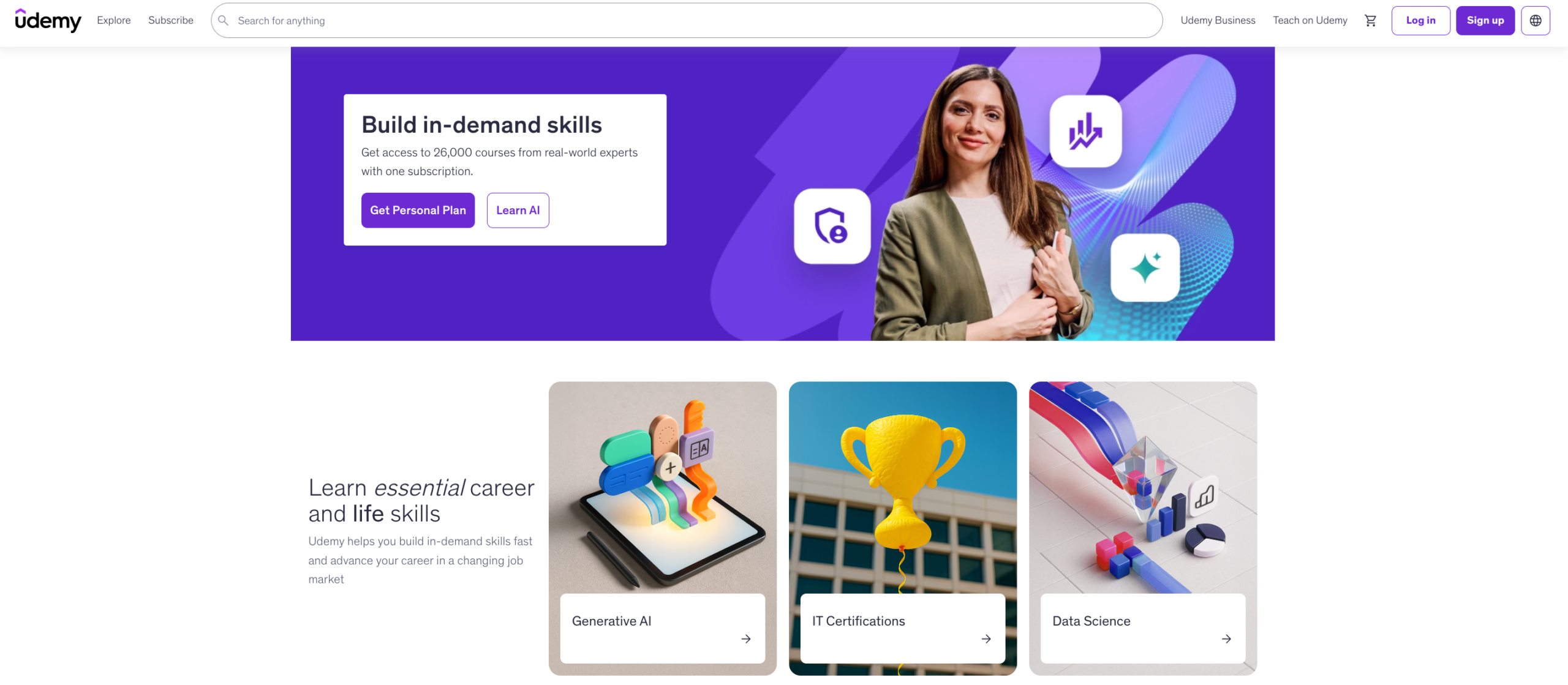
If you are just starting out and don’t have a large following yet, Udemy is often the first place you should look. With over 80 million students globally, it offers a massive built-in audience that can help you get your first few sales without needing a complex marketing funnel.
However, you should know how the revenue sharing works. If you bring a student to the platform using your own instructor coupon, you keep a generous 97% of the sale. But if a student finds you through Udemy’s organic search, your share drops to 37%.
For those of you whose courses are selected for Udemy Business, the revenue share for subscriptions has recently moved to 15% as of January 2026.
While the lower margins on organic sales can be a bit of a hurdle, the sheer volume of traffic Udemy provides makes it a powerful tool for building your initial reputation and reaching a global market.
02. Skillshare
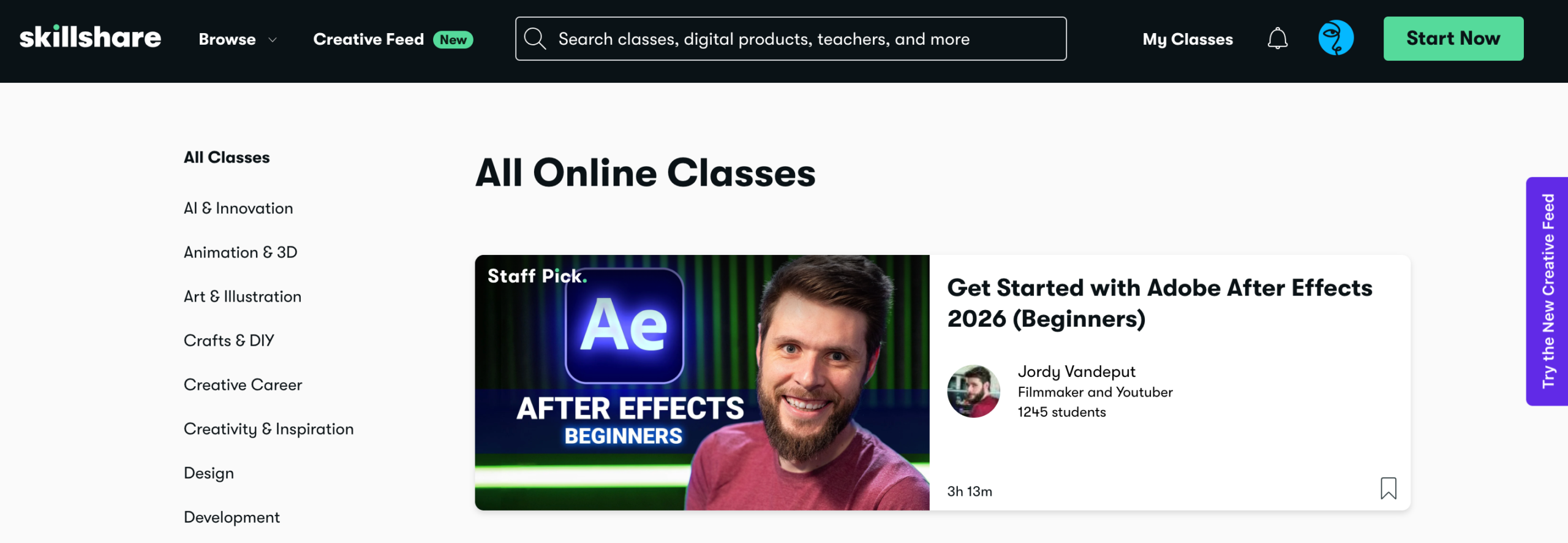
If your expertise lies in creative fields like design, photography, or illustration, Skillshare is a platform you should definitely consider.
Unlike other marketplaces where you sell individual courses, Skillshare operates on a subscription model. This means you don’t have to worry about pricing your own classes; instead, you earn a share of a monthly royalty pool based on the total number of minutes premium members spend watching your content.
One important update for 2026 is that you now need at least 50 followers on the platform to qualify for these royalty payouts. This makes building a small, engaged community your first priority when you join.
While the “pay-per-minute” model might seem small at first, it rewards creators who produce engaging, bite-sized lessons that keep students coming back.
03. Domestika

If you’re looking for a course platform that feels more like a high-end production studio than a simple hosting site, Domestika is a unique contender.
Unlike the open-door policy of many other marketplaces, Domestika is highly curated. They focus specifically on the creative community. Think illustration, craft, and design, and they often work closely with instructors to ensure every course meets a professional standard of quality.
For you as a course creator, this means your content sits alongside some of the best in the industry, which can significantly boost your personal brand.
However, this curated approach also means you have less control over certain aspects, such as your course pricing. The revenue model typically involves an advance fee followed by royalties. Though it’s worth noting that the platform has faced some recent challenges with payment consistency in early 2026.
04. Eduonix

If you specialize in technical subjects like web development, data science, or software engineering, Eduonix is a marketplace that deserves your attention.
While it may not have the massive name recognition of some larger competitors, it has carved out a strong niche by focusing on professional and technical skill-building. For you as a creator, this means your courses are presented to a highly targeted audience looking for specific, career-oriented training.
One of the most interesting aspects of Eduonix is its flexible revenue-sharing model. If you drive the sale yourself using an instructor coupon, you keep a significant 95% of the revenue.
For organic sales through their platform, the split is typically 50%. However, sales through their affiliate network or specialized “Codeblu” enterprise channel offer different rates, such as 25% and 15%, respectively.
This variety allows you to benefit from multiple sales channels without having to manage them all yourself.
05. BitDegree
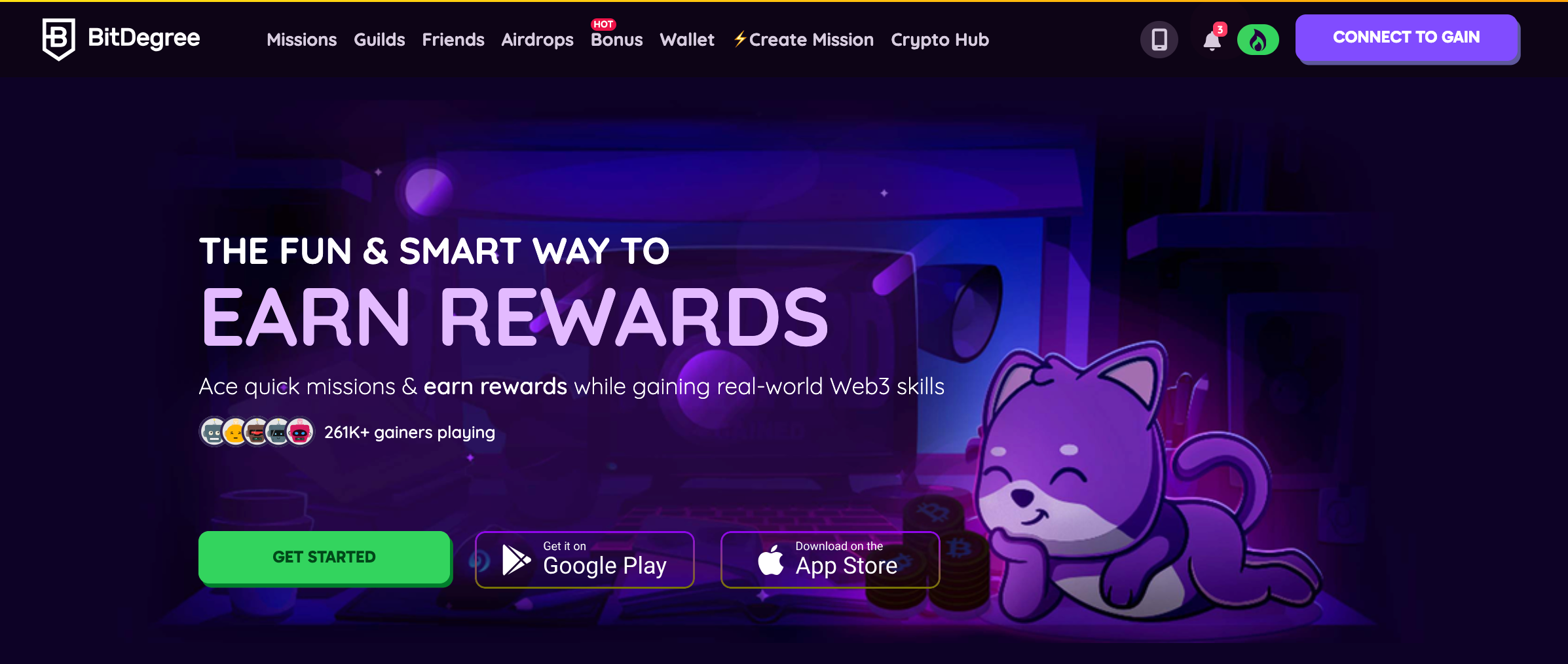
If you are teaching courses on cutting-edge topics like blockchain, cryptocurrency, or Web3, BitDegree is a marketplace that offers a very different experience from traditional platforms. I
BitDegree is built on a “learn-and-earn” model, which uses gamification and crypto rewards to keep students motivated. For you as a creator, this means your content is part of an ecosystem that actively incentivizes students to finish your courses, which can lead to higher completion rates and better engagement.
From a revenue perspective, BitDegree is very instructor-friendly. If you bring your own students to the platform using a promotional link, you keep a massive 99% of the sale. However, for students who find you through BitDegree’s own advertising and missions, you receive a 25% share.
06. Tutorialspoint
If you’ve ever searched for a quick coding fix or a technical explanation, you’ve likely landed on Tutorialspoint. Known for its vast library of free text-based tutorials, it has also become a significant marketplace for video courses.
For you as a creator, the biggest draw is the platform’s massive, pre-existing traffic. With over a million active users, your technical or business courses are placed right in front of a dedicated audience that is already there to learn.
When it comes to your earnings, Tutorialspoint keeps things straightforward with a 50/50 revenue split. This is calculated after deductions for things like affiliate commissions, payment gateway charges, and taxes.
While some other platforms might offer higher percentages for your own promotions, Tutorialspoint’s model is built on the value of their established reach. It’s an excellent choice if you want to tap into a high-intent, technical demographic without having to build your own marketing engine from scratch.
07. OpenSesame
If you are looking to break into the lucrative world of corporate training, OpenSesame is a marketplace you shouldn’t overlook. Unlike platforms that sell directly to individual students, OpenSesame acts as a bridge between you and large businesses.
OpenSesame specializes in B2B (business-to-business) sales, providing a massive catalog of courses that companies use to train their employees on everything from leadership and compliance to wellness and technical skills.
For you as a creator, this means your courses are sold in bulk to organizations rather than one-off sales to individuals. While they don’t publicly disclose their exact revenue share, the benefit is access to a market that is typically very difficult to reach on your own.
OpenSesame handles the complex sales cycles and integrations with corporate Learning Management Systems (LMS). This allows you to focus on creating high-quality, professional content.
08. Coursera

If you are aiming for the highest level of academic and professional credibility, Coursera is the gold standard. However, it’s important to understand that Coursera isn’t an open marketplace like Udemy. It’s a platform built on partnerships with world-class universities and industry giants like Google and IBM.
For you as an individual creator, this usually means you need to be affiliated with one of these partner institutions to get your content on the platform.
Even though the barrier to entry is high, the rewards are significant. Your courses are presented with a level of prestige that few other platforms can match, which makes them highly attractive to serious learners and corporate teams.
One major change to keep on your radar for 2026 is the introduction of a 15% platform fee on new sales. This fee is applied on top of existing revenue-sharing agreements with partners, which has shifted the financial landscape for many creators on the platform.
09. edX

If you are looking for a platform that prioritizes academic depth and institutional prestige, edX is a major player to consider.
Much like Coursera, edX is not an open marketplace where any individual can simply sign up and start selling. Instead, it is a highly selective platform that partners with world-class universities like Harvard, MIT, and Oxford.
For you as a creator, this means that to get your content on edX, you typically need to be part of the faculty or staff at one of these partner institutions.
While the barrier to entry is high, the benefit is the immense credibility that comes with the edX brand. The platform is known for its rigorous, university-level courses and its commitment to open-access education.
Since its acquisition by 2U, edX has also expanded into professional bootcamps and executive education, offering more diverse ways for institutional creators to reach a global audience.
10. Maven
If you are looking to move away from the “set it and forget it” model of pre-recorded courses, Maven is a platform that you should definitely explore. It specializes in cohort-based courses (CBCs), which focus on live, community-driven learning.
For you as a creator, this means you aren’t just selling a series of videos; you are selling an experience that includes live sessions, group projects, and direct interaction. This high-touch model often allows you to charge significantly more.
Maven is designed for experts and professionals who want to build a premium brand. The platform provides all the tools you need to manage your cohorts, from landing pages and email marketing to student portals and live session integrations.
While Maven does take a 10% fee on your sales, the trade-off is access to a platform that is specifically optimized for high-ticket, high-engagement education. It’s a fantastic choice if you enjoy teaching live and want to foster a deep sense of community among your students.
11. Pluralsight
If you are a subject matter expert in software development, IT operations, or cybersecurity, Pluralsight is a marketplace that offers a highly professional and specialized environment.
Unlike open platforms, Pluralsight uses a rigorous vetting process for its authors, ensuring that only high-quality, technically accurate content reaches its audience.
For you as a creator, this means your work is positioned alongside some of the most respected names in the tech industry, which can significantly enhance your professional credibility.
The revenue model on Pluralsight is unique, typically involving an upfront fee for course creation followed by ongoing royalties based on viewership. You essentially earn a “residual” income that is tied to how much time students spend watching your content each month. This model rewards creators who produce evergreen, high-demand technical training that remains relevant over time.
While the application process is selective (often involving an audition and a curriculum review), the benefit is access to a dedicated, tech-focused audience and a platform that handles all the marketing and enterprise sales for you.
Stop Being Just a Number: Take Full Control with Klasio
Choosing the right marketplace is a great first step, especially if you’re looking for immediate traffic and a hands-off approach to hosting.
But as your course business grows, you might find yourself wanting more. More control over your branding, more direct access to your students, and more of the revenue you’ve worked so hard to generate.
If you’re tired of high commission fees and the limitations of a shared marketplace, it’s time to look at a solution that puts you in the driver’s seat. That’s where Klasio comes in.
Klasio is a modern, AI-powered SaaS LMS designed specifically for creators who want to build their own online academy without the technical headaches. Unlike traditional marketplaces, Klasio gives you a dedicated space to host pre-recorded courses, run live classes via Zoom or Google Meet, and even sell digital products like eBooks and templates, all under your own brand.

With a “free forever” plan that charges zero commission, it’s the perfect way to test the water and commit to a paid plan as you grow. If you’re ready to stop being just another listing in a crowded marketplace and start building a sustainable, independent education business, sign up to Klasio today.




Leave a Reply