
You’ve spent weeks, months, or perhaps even years pouring your expertise into a curriculum. You’ve recorded the videos, designed the workbooks, and built a course that you know can truly change lives.
But now comes the hardest part: getting people to actually buy it.
In this post, we’re going to dive into the psychological principles that drive human behavior. From the way you frame your pricing to the subtle cues that build instant likability, these tips will help you create a sales strategy that resonates on a deeper level.

01. Herd Behavior
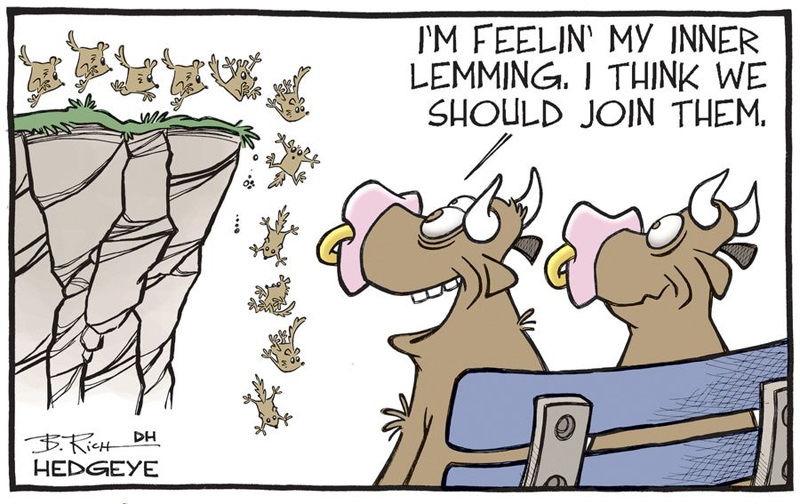
Course creators often focus on the quality of the content, but the truth is, people rarely buy based on content alone. They buy based on trust, and one of the fastest ways to build trust is through the psychological principle of Herd Behavior, which is often called Social Proof in marketing.
Think about it: when you’re looking for a new restaurant in an unfamiliar town, you’re more likely to choose the one with a line out the door than the empty one, even if you don’t know anything about the food. Why? Because you assume the crowd knows something you don’t.
Your potential students are doing the exact same thing. They are uncertain about spending their money and time, and they look to the actions of others to validate their decision. Seeing that other people—especially people like them—have already enrolled and succeeded significantly reduces their perceived risk.
Here is how you can apply this concept to your course sales page:
Quantify the Crowd
Don’t just say your course is popular; use specific numbers. A simple statement like “Join 5,000+ students who have already enrolled” is a powerful, direct signal that your course is a proven solution. This is a clear, visual representation of the “herd” that the prospect can join.
Use Targeted Testimonials
Testimonials are more than just compliments; they are tools to overcome specific objections. When collecting feedback, look for quotes that address the common hesitations your prospects have.
For example, if you know people worry your course is too technical, a testimonial that says, “I have zero coding experience, but the step-by-step lessons made this completely accessible,” is far more effective than a generic “Great course!” It uses the voice of a successful student to directly reduce a prospect’s anxiety.
Place Proof Where It Matters Most
The moment a potential student is about to click the “Enroll Now” button is the moment of highest uncertainty. This is the perfect place to use a final piece of social proof to give them a nudge.
Try placing a small, concise piece of proof directly under your Call-to-Action button. This could be a simple line like: “Trusted by 1,200 course creators since 2023” or a five-star rating graphic with the number of reviews. This small detail reinforces the idea that they are making a safe, popular choice right before they commit.
02. Loss Aversion
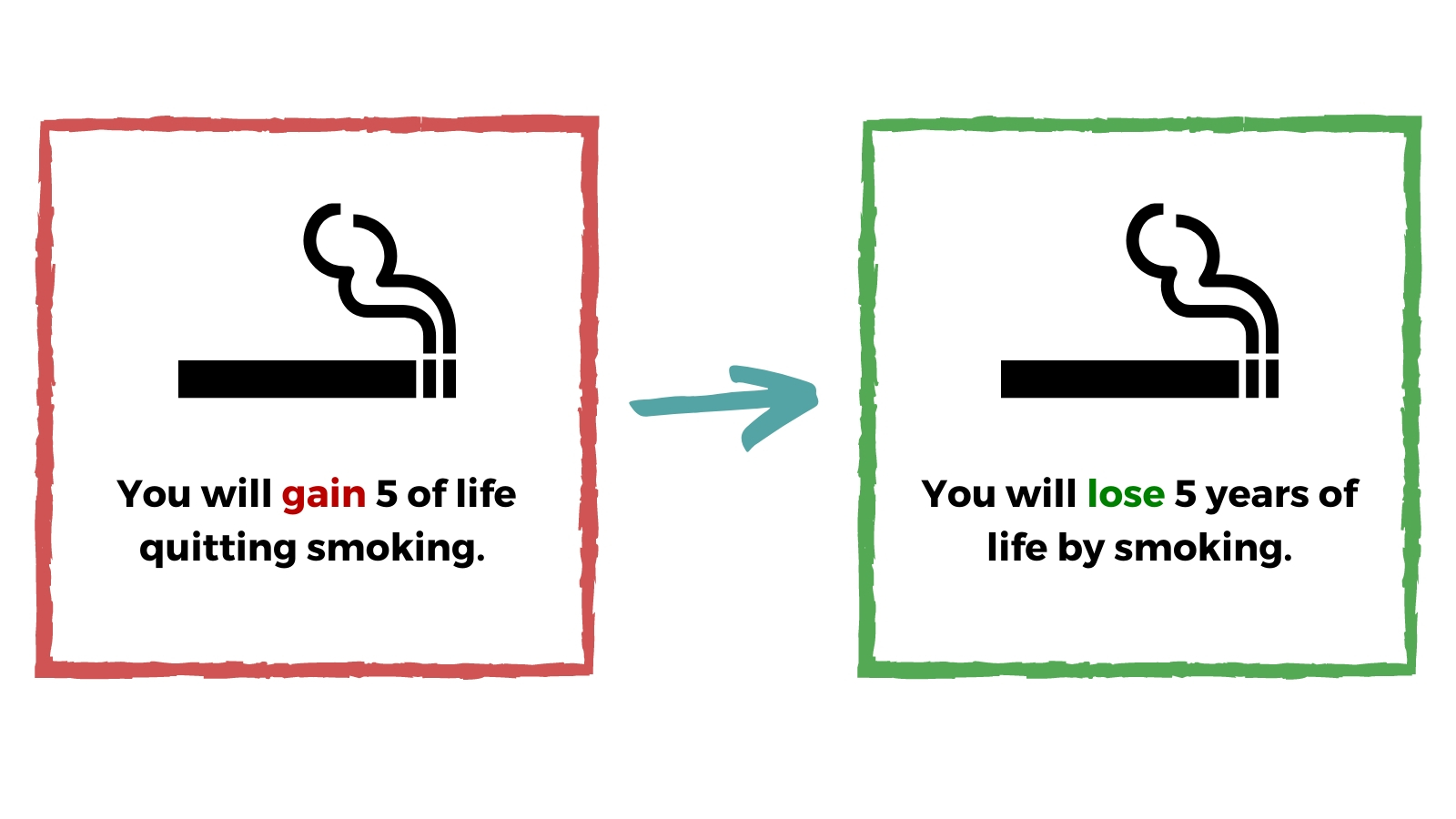
The concept of Loss Aversion is one of the most powerful psychological drivers in sales. Simply put, people are more motivated to avoid losing something they already have or could have than they are to gain something new. This is the engine behind the marketing psychology of Fear of Missing Out (FOMO).
For your online course, this means that a potential student is more likely to act immediately if they believe they will lose access to a discount, a bonus, or a spot in a cohort, rather than if you simply tell them how much they will gain by enrolling. The fear of loss prompts immediate action.
However, a critical point for course creators is to ensure that any scarcity or urgency you create is genuine. If you promise a limited-time offer and then immediately relaunch it, you erode the trust you’ve worked hard to build.
Here is how you can use genuine scarcity and urgency effectively:
- Use Limited-Time Offers for Discounts: The most common and effective application is a time-bound discount. If your course is normally $497, offer it for $397 for a specific, non-negotiable period.
- Create Scarcity with Enrollment Caps: If your course includes a live component, such as group coaching calls, one-on-one feedback, or a private community, you have a natural, genuine reason for scarcity: your time.
- Offer Limited-Time Bonuses: Instead of discounting the price, you can keep the price stable and offer a bonus that disappears after a set time. This maintains the perceived value of the core course while still creating urgency.
03. The Principle of Reciprocity
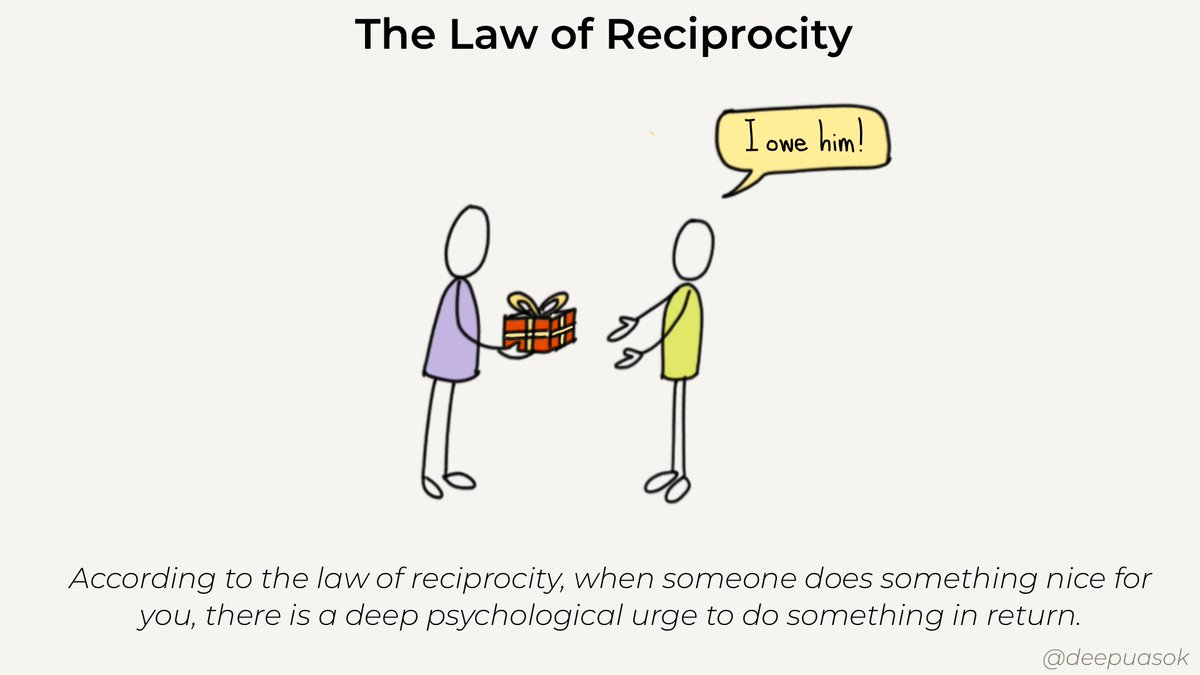
The Principle of Reciprocity is a fundamental human behavior: we feel obligated to return a favor when someone gives us something. In the context of selling online courses, this means that by giving your audience something of genuine value first, you create a subconscious sense of obligation and goodwill that makes them more open to purchasing from you later.
This is the core idea behind offering free content. However, for reciprocity to truly work, the gift must be meaningful, relevant, and given with no immediate strings attached. It should solve a small, specific problem for your ideal student.
Here is how you can apply this concept to your course marketing:
- Offer High-Value Lead Magnets: A lead magnet is your first opportunity to demonstrate your expertise and provide value. It should be something that your ideal student would happily pay for, but you are giving it away for free.
- Create “Bait Wins”: A “bait win” is a quick, valuable interaction that gives the prospect an immediate result or insight. This is a powerful form of reciprocity because it delivers value before they even opt in or give you their email.
- Give Without Expectation: The key to activating reciprocity is to give freely. When you offer your free content, focus on the value it provides, not on the next step in your sales funnel. The goodwill you build will naturally lead to higher conversion rates when you do present your paid offer.
04. The Principle of Authority
The Principle of Authority states that people tend to trust and obey those they perceive as having expertise or a high status. When selling an online course, this principle is crucial because students are essentially paying for your knowledge and guidance. If they don’t see you as a credible expert, they won’t enroll.
The good news is that you don’t need a PhD or a massive following to establish authority. You simply need to strategically present the credentials and experiences you already have.
Here is how you can apply this concept to your course marketing:
Use Visual Cues of Expertise
Visuals are a fast way to communicate authority. Think about how a doctor’s white coat or a police officer’s uniform instantly conveys status. You can use similar cues in your marketing:
- Professional Appearance: Invest in high-quality, professional headshots and video production.
- Contextual Cues: Use photos of yourself speaking on stage, being interviewed, or working in a professional setting. Even a well-designed website and course platform contribute to this perception.
Highlight Your Credentials and Media Mentions
Be clear and concise about why you are qualified to teach this subject. This goes beyond a simple bio. For instance:
- Specific Achievements: Instead of saying “I’m an expert marketer,” say “I’ve helped 10 companies achieve 7-figure revenue using this exact system.”
- “As Seen In” Badges: If you’ve been featured in any reputable publication, podcast, or industry blog, use their logos prominently on your sales page. This is a form of borrowed authority that instantly transfers credibility to you.
Create a Proprietary System
A powerful way to establish authority is to frame your course content as more than just a collection of lessons. Instead, present it as a unique, proprietary system or methodology that you created.
For example, instead of calling your course “Facebook Ads for Beginners,” call it “The 5-Step [Your Name] Ad System.”
Giving your process a unique name elevates it from generic advice to a specialized, exclusive framework that only you can teach. This positions you as the originator and therefore the ultimate authority on the subject.
05. Emotional Decision-Making
While we like to think of ourselves as rational beings, the truth is that Emotional Decision-Making drives most purchases.
People decide with their feelings first, and then they use logic and facts to justify that decision. For course creators, this means your sales copy should focus less on the features of your course and more on the transformation it offers.
Your goal is to tap into the prospect’s aspirations, fears, and desires. The most effective tool for doing this is Storytelling. A good story creates a connection, makes your course relatable, and allows the prospect to envision their own success.

Here is how you can use emotion and storytelling to sell your course:
Sell the Transformation, Not the Content
Instead of listing the number of modules or hours of video, describe the “after” state. What will the student be able to do, feel, or achieve once they complete your course?
If you teach a course on financial planning, don’t just say “Module 3 covers budgeting.” Say, “Imagine the relief of checking your bank account without a knot in your stomach. That’s the freedom you’ll build in Module 3.”
Use Narratives of Transformation
The most compelling stories follow a simple structure: a relatable character (your ideal student) is struggling (the problem), they find a guide (your course), and they achieve success (the transformation).
- Your Own Story: Share your personal journey from struggling with the problem to solving it with the system you now teach.
- Student Success Stories: Feature testimonials that are narratives, not just compliments. A testimonial that says, “I was stuck at $2k per month, and now I’m consistently hitting $8k” is much more powerful than a simple “This course is great.”
Create a Curiosity Gap
A Curiosity Gap is the space between what a person knows and what they want to know. It’s a powerful emotional trigger that compels people to seek out the missing information.
Pose a question that highlights the gap between their current struggle and your solution: “You’ve tried all the free tips, but why are you still stuck at the same income level? The answer is a single, overlooked strategy we cover in Lesson 1.”
06. Anchoring and Framing
Creating a pricing strategy is one of the most challenging aspects of selling an online course, but it’s also one of the most psychological. The price you set is not just a number; it’s a tool for shaping the perceived value of your course. Two powerful concepts you can use are Anchoring and Framing.
Anchoring: Setting the Reference Point
Anchoring is the cognitive bias where people rely too heavily on the first piece of information offered (the “anchor”) when making decisions. For your course, this means the first price a prospect sees will influence how they judge all subsequent prices.
- The Original Price Anchor: Always show the original, higher price crossed out next to the discounted or current price.
Example: Displaying “$997” crossed out next to your current price of “$497” makes the current price seem like a significant bargain, even if $497 is your standard price. The $997 serves as the anchor, making the actual price feel much more reasonable.
- The Decoy Effect: Introduce a third, less attractive option (the “decoy”) to make your main package look superior by comparison.
Example: If your main offer is Package B ($497), introduce a Package A ($397) that is clearly missing a key component (e.g., no community access). Then, introduce a Package C ($797) that is only slightly better than Package B. Package B, the target, now looks like the clear, best-value choice.
Framing: Changing the Perception of Cost
Framing is how you present the cost to the buyer. By changing the context, you can dramatically change how expensive the price feels.
- Break Down the Cost: Present the total cost in a smaller, more digestible context.
Example: Instead of saying “The course costs $365,” frame it as “That’s just $1 a day for a year of access.” This minimizes the perceived cost and makes the investment feel less intimidating.
- Charm Pricing: Ending your prices in 9 or 7 (e.g., $97, $497) makes them appear subconsciously cheaper than round numbers (e.g., $100, $500). This small detail can have a measurable impact on conversion rates.
07. Consistency Bias
The human mind has a deep-seated, almost automatic need to be, and to appear, consistent with its past decisions and actions. This psychological principle, often called Consistency Bias or the Commitment and Consistency principle, is a powerful tool for you as a course creator.
Once a potential student makes even a small, initial commitment to you or your material, they are far more likely to follow through with a larger commitment, like purchasing your full course.
The key is to understand that the commitment must be active, public, and voluntary to be most effective. You are not trying to trick your audience; you are simply guiding them down a path of small, logical steps that align with their stated goals.
The goal is to get your audience to say “yes” to something small, which then makes it easier for them to say “yes” to the final purchase. Think of it as a staircase where each step is a small, low-risk commitment that builds momentum toward the final decision.
The “Foot-in-the-Door” Technique
This technique is all about starting with a small request that is easy to agree to, and then following up with a larger, related request.
- Small Request (The Foot): Offer a free, high-value resource that requires a small action. This could be a one-page PDF checklist, a 5-day email challenge, or a short, free video lesson. The commitment here is the time spent and the exchange of an email address.
- Larger Request (The Sale): The full course purchase. For example, instead of just offering a free e-book, ask your prospect to complete a “3-Step Quick-Start Guide” first.
Encouraging Public Commitment
A commitment is much stronger when it is made publicly. When people declare their intentions to others, they feel a greater pressure to live up to that declaration. Encourage students who enroll in your free or low-cost content to share their goals or progress publicly.
For example, in your free mini-course, ask students to post in a dedicated Facebook group or on social media, “I just started the ‘X’ challenge to finally master [skill]. Wish me luck!”
As students state their goal on a public platform, they create an external pressure to follow through. When you launch your paid course, it becomes the tool they need to maintain their public identity as a committed learner. They are simply acting in a way that is consistent with the goal they publicly declared.
08. Confirmation Bias
Confirmation Bias is the human tendency to search for, interpret, favor, and recall information in a way that confirms or supports one’s prior beliefs or values.
For course creators, this means your potential students are not looking for new information. They are looking for validation that their existing beliefs about their problem and its solution are correct. Also, your course is the perfect vehicle for that solution.
You can use this powerful bias to your advantage by positioning your course as the ultimate confirmation of what your ideal student already suspects to be true.
Aligning with Pre-Existing Beliefs
Your marketing copy should not try to change minds, but rather speak directly to the beliefs your audience already holds about their situation.
For example, your audience already believes they have a problem and that they are capable of solving it. They just need the right system.
Your Student’s Belief:
“I know I could be successful at [skill], but I’m just missing a clear, step-by-step plan.”
Your Copy:
Instead of saying, “You’re doing everything wrong.”
Say, “You’re already doing the right things, but without a proven roadmap, you’re wasting time. Our course is the roadmap you’ve been searching for to finally put all your hard work into action.”
Reinforcing the Identity
People buy courses not just for the information, but to become the person who has the results the course promises. Your marketing should confirm their desired identity.
What we mean is, your audience wants to believe they are a certain type of person: a successful entrepreneur, a master coder, a confident writer. So, you should use language and testimonials that reflect the identity your student is striving for.
For example, if your course is about launching a side business, don’t just talk about the steps. Talk about the identity of the person who takes the course.
Use testimonials from people who say, “I always knew I had an entrepreneur inside me, and this course finally confirmed it by giving me the structure I needed to launch.”
When you use words like “finally,” “always knew,” and “confirmed,” you enforce their pre-existing belief about their own potential. Your course simply becomes the final piece of evidence they need to confirm their self-image.
09. Negativity Bias
The human brain is wired for survival, which means it gives significantly more attention and weight to negative information and experiences than to positive ones. This is known as the Negativity Bias.
A threat, a risk, or a loss registers more powerfully than a benefit or a gain of equal size. As a course creator, you can use this principle together with the concept of loss aversion.
Your goal is to highlight the Cost of Inaction (COI). Instead of pitching a dream result, position your offer as the solution to a problem your audience is desperate to escape.
The Cost of Inaction
Instead of only focusing on the positive transformation your course offers, you must clearly articulate the negative consequences of not enrolling. This is where the negativity bias kicks in, making the decision to buy feel urgent and necessary.
Frame the problem in terms of what your potential student is currently losing: time, money, or opportunity by staying in their current situation.
- Instead of saying, “Learn to save 5 hours a week,” say, “Stop wasting 5 hours every week on manual tasks. That’s 20 hours a month you’ll never get back.”
- Instead of saying, “Get the skills for a promotion,” say, “If you don’t master this skill now, you risk being overlooked for the next promotion in favor of a colleague who has.”
Social Proof of Relief
Use testimonials that focus on the relief of escaping a negative situation, rather than just the joy of the outcome. Negative stories that end with a positive resolution are highly compelling because they tap into the reader’s own fears.
To do this, seek out testimonials that describe the student’s “before” state in vivid, painful detail.
For example:
“Before this course, I was terrified of client meetings. My anxiety was so bad that I almost quit my freelance business. This course didn’t just teach me a process; it removed the fear that was holding me back. Now, I actually look forward to closing deals.”
The reader, who is likely experiencing similar fear, connects with the negative emotion and sees your course as the immediate solution to their pain.
10. Likability
The Likability principle, often referred to as the Liking principle, is one of the most fundamental drivers of persuasion.
People are significantly more likely to say “yes” to requests from people they know and like. It is a psychological shortcut where trust and affinity are built through perceived similarity, genuine praise, and cooperation.
As a course creator, you are the face of your product, and your likability is a direct factor in your conversion rate.
Building Rapport Through Similarity
We are instinctively drawn to people who are similar to us, whether in background, values, or even minor preferences. This sense of shared identity creates an immediate foundation of trust.
So, what you can do is openly share your origin story, including your struggles and the specific pain points that led you to create the course.
For example: If your course is about escaping the 9-to-5 grind, don’t just say, “I’m a successful entrepreneur.” Instead, say, “I spent 10 years feeling trapped in a cubicle, just like you.”
When you highlight the shared struggle and the common enemy (the cubicle, the time-wasting process, the confusing software), you signal to your audience, “I am one of you,” which immediately lowers their guard and increases your likability.
The Power of Genuine Praise
Humans have a powerful, positive reaction to praise, even if it’s small. A compliment acts as a social gift, subtly invoking the principle of reciprocity and making the recipient feel valued.
To apply this in your course marketing strategy, use your copy and free content to genuinely acknowledge your audience’s effort and intelligence.
For example: When offering a free guide, instead of just giving it away, frame it with praise: “This guide is designed for people like you who are ready to move past the basics.”
By complementing their existing drive and intelligence, you make them feel good about themselves, and that positive feeling becomes associated with you and your brand.
Forging Bonds Through Cooperation
Working together toward a common goal is one of the most reliable ways to build camaraderie. When you and your audience are “pulling together” against a shared challenge, you become allies.
To apply this, frame your course as a cooperative journey where you are the guide, not the guru.
For example: Use language like, “We are going to tackle this together,” or “I’ll be right there with you in the community.”
A great way to do this is to ask for their input on future course content or bonus materials. By asking, “What is the single biggest obstacle we need to overcome next?” you create a sense of shared mission.
Your course is no longer a transaction; it is a collaborative effort to achieve a mutual success, making you a likable partner in their journey.
11. Halo Effect
The Halo Effect is a cognitive bias where a person’s overall impression of another person, a brand, or a product influences their feelings and thoughts about that entity’s specific, unrelated traits.
So, what happens is, one positive trait casts a “halo” over everything else.
For example, if your course landing page looks incredibly professional, your audience will subconsciously assume the course content is also high-quality, even if they haven’t seen a single lesson yet.
Leveraging First Impressions
The first thing a potential student sees should be your “star product”. It’s the element that is undeniably excellent and sets the positive tone for everything else. for example,
Your website, course landing page, and course portal are the digital storefront for your business. Their appearance is the first trait that creates the halo.
Also, invest in a clean, modern, and professional design. Use high-quality, consistent branding, clear typography, and professional photography.
Associating with Authority
You can borrow a halo from an external source of authority or prestige to instantly elevate your own perceived value. For example, you can highlight your most impressive single achievement or association prominently.
What we mean is, if you have a degree from a top university, mention it. If you’ve been featured in a major publication, put their logo on your page. If you’ve worked with a well-known client, use their name (with permission).
The key is to lead with your strongest asset. If you teach a business course and your strongest asset is your experience at a Fortune 500 company, that single detail instantly signals professionalism and credibility.
The audience thinks: “A person who worked at [Prestigious Company] must know what they’re talking about, so their course is worth the investment.”
Psychology is Your Secret Sales Partner
By applying these psychological tips for selling online courses, you are building a bridge of trust between your expertise and the students who are searching for a solution.
Remember, the goal of using these psychological tips isn’t to manipulate. It’s to remove the mental barriers that keep your ideal students from taking the leap.
Most people want to change, want to learn, and want to solve their problems, but their own subconscious biases often hold them back. Your job as a course creator is to use these tools to make the path to “yes” as clear and comfortable as possible.




Leave a Reply