
You’ve been thinking about launching your online course, but you’re worried that no one will buy it. Well, this anxiety is very true and is the reality of many course creators around the world.
However, this doesn’t have to be the case for you. Preselling your course can flip the script.
If you presell your course, you can validate your course idea and get some early cash flow to invest in the course.
So, to help you, we have compiled all the steps needed to presell your course in 9 steps.
TL;DR
- The first step to preselling your course is to find the transformation your students will achieve through your course.
- Once you have figured out the transformation, talk directly to your ideal learners to ensure you are solving a problem they are actually willing to pay for.
- Use a lower early-bird price and exclusive bonuses to reward those who support your course during the development phase.
- Be honest about the course being a work-in-progress to build trust and gather real-time feedback as you release content.
- Use the testimonials and social proof from your first cohort to create FOMO and launch to the public at full price.
Step 01: Identify Your Students’ Transformation
Before you start creating your course, you have to figure out the actual change you’re promising to your potential students.
It’s easy to get caught up in the “what” of your course: the lessons, the worksheets, and the hours of video. But your students don’t actually care about those things.
They care about who they become after they finish. This is the transformation. It’s the shift from a person who has a problem to a person who has a solution.
To identify this, you need to look past your expertise and look at the person standing on the other side of it. Think about the “Zero” state: where are they right now?
Maybe they are frustrated, stuck, or simply lacking a specific skill that is holding them back. Then, look at the “Hero” state: what does their life look like once they’ve finished your course?
They shouldn’t just “know” more; they should be able to “do” more. If they were struggling to manage their time, the transformation isn’t “learning about productivity”. It’s “finishing their work by 5 PM every day so they can spend time with their family.”
A good way to pin this down is to write out a single, honest promise. Use the phrase: “By the end of this course, you will be able to…” and fill in the blank with a specific, desirable action.
If you can’t finish that sentence with something concrete, your transformation is still too vague.
You also need to be clear about who this transformation is for. A transformation for a beginner looks very different from a transformation for an expert.
For example, if you are teaching a course on social media marketing, a beginner’s transformation might be “setting up your first business profile and posting your first week of content,” whereas an expert’s transformation would be “optimizing your existing ad spend to double your conversion rate while cutting your costs in half.”
Step 02: Reach Out to Potential Students Directly for Validation
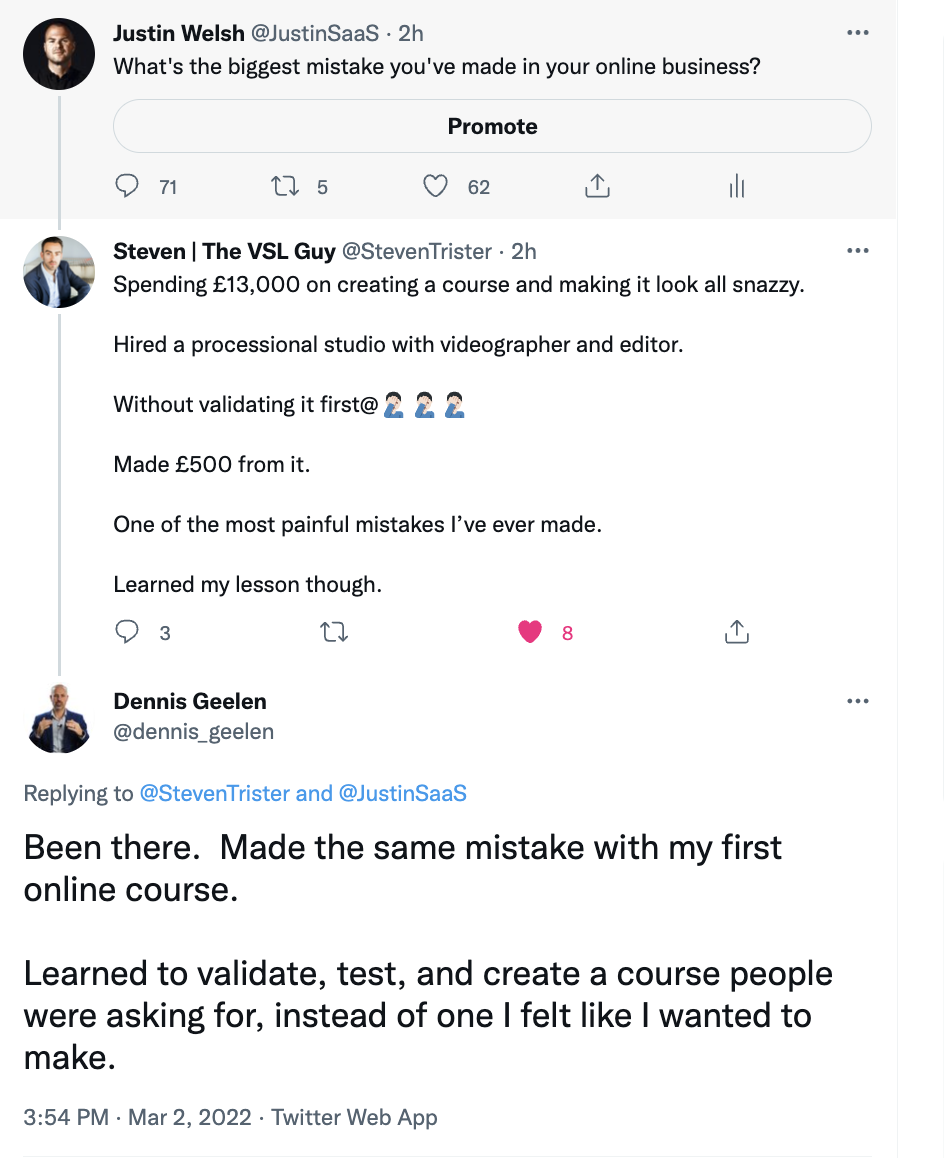
Once you have a clear idea of the transformation you’re offering, you need to make sure people actually want it enough to pay for it. It’s easy to assume your idea is great, but the only way to know for sure is to talk to the people you’re trying to help.
To get the most out of this validation phase, focus on these key actions:
Conduct One-on-One Conversations
Reach out to 10 or 20 people who fit your ideal student profile through direct messages, emails, or quick 15-minute calls. Instead of asking if they would buy your course, ask open-ended questions before creating your course about their daily struggles.
For example, if you are creating a course on meal prepping for busy parents, ask, “What is the hardest part about getting dinner on the table during the week?” If they say cooking time is the issue, but your course focuses on grocery shopping, you’ll know you need to adjust your content.
Listen for Their Specific Language
Pay close attention to the exact words people use to describe their problems. If you are a graphic designer and your audience keeps saying they feel “overwhelmed by technical tools” rather than “lacking creative inspiration,” you should use that specific language in your marketing.
This makes your potential students feel understood and proves that your solution is built for them.
Test Interest with a Small Action
See if people are willing to take a simple step, like joining a waitlist or downloading a one-page resource. For instance, if you share your “one-sentence promise” on social media and invite people to sign up for updates, the number of sign-ups gives you a concrete signal of demand.
If nobody signs up, it’s a clear sign that your offer needs to be refined before you spend any more time on it.
Step 03: Create the Curriculum
Now that you’ve validated the problem, it’s time to map out the solution. Your curriculum is the roadmap that takes your students from their current “Zero” state to the “Hero” transformation you promised in Step 01. The goal here isn’t to create every single lesson right now, but to build a solid structure that shows your students exactly how they will achieve the result.
To build a curriculum that actually delivers on your promise, keep these points in mind:
Work Backward from the Transformation
Start with the final result and ask yourself, “What is the very last thing they need to do to achieve this?” Then, keep working backward until you reach the starting point.
For example, if your transformation is “Landing your first $5,000 freelance client,” the final step isn’t about “learning about sales”. It’s about “sending the final contract and receiving the deposit.”
Working backward from that moment helps you identify that they first need to know how to handle a discovery call, which requires a proven pitch, which requires a targeted lead list.
Organize into Logical Modules
Group your steps into 4 to 6 main modules. Each module should represent a significant milestone in the journey.
If you’re teaching a course on “Basic Home Woodworking,” your modules might be:
1. Setting Up Your Shop,
2. Understanding Your Materials,
3. Mastering Essential Cuts,
4. Building Your First Project, etc.
Focus on Action
For every lesson you plan, ask yourself what the student will do after watching it. Instead of just explaining a concept, give them a specific task.
For instance, in a course about “Personal Finance for Freelancers,” a lesson shouldn’t just be “How Taxes Work”; it should be “Setting Up Your Tax Savings Account.”
Step 04: Create the Sales Page and Your Offer
Your sales page is where your transformation, curriculum, and authority come together to make a compelling case for your course. Since you are preselling, this page doesn’t need to be a complex website. It just needs to be a simple landing page for selling your course that communicates what you are building and why people should join you early.
To create a sales page that converts, focus on these essential elements:
Lead with the Transformation
Use the one-sentence promise you created in Step 01 as your main headline. People should know within three seconds exactly what they will be able to do after taking your course.
For example, if you are helping people overcome public speaking anxiety, your headline shouldn’t be “Public Speaking 101”; it should be “Deliver Your First 10-Minute Presentation Without Breaking a Sweat.”
Be Transparent About the Presale
Clearly state that the course is currently in development and that these early buyers are your “Founders.” Explain the benefit of joining now, such as a significantly lower price or direct access to you, and provide a clear timeline for when the content will be released.
This honesty builds trust and makes people feel like they are part of an exclusive inner circle rather than just customers.
Design an Irresistible “Founder” Offer
To encourage people to buy before the course is built, include specific “Founder-only” bonuses. For instance, you might offer a weekly live Q&A session for the first cohort, a private community group, or a 50% discount that will never be offered again.
This creates a strong incentive for them to take the risk of buying early.
Address Risk with a Strong Guarantee
Since the product isn’t fully built yet, potential students will naturally feel some hesitation. Lower this barrier by offering a straightforward refund policy.
For example, you could offer a “100% Satisfaction Guarantee” where they can get a full refund within 14 days of the course officially launching if it doesn’t meet their expectations. This shows you are confident in your curriculum and respect their investment.
Step 05: Establish Authority by Marketing Your Experience
Even with a great curriculum, people need to know why you are the right person to lead them to the transformation. You don’t need a PhD or a decade of teaching experience to be an authority; you just need to show that you have successfully walked the path you are now inviting others to follow. Your authority comes from your results and your transparency.
To build trust and establish yourself as the expert, focus on these strategies:
Share Your Personal Case Study
The most powerful proof you have is your own success. Talk about where you started, the obstacles you faced, and the specific strategy you used to reach the “Hero” state.
For example, if you are teaching a course on “Growing a Newsletter to 10,000 Subscribers,” show the screenshots of your own growth curve and talk about the specific month where everything finally clicked.
Document the “Behind the Scenes”
Authority isn’t defined by the final outcome, but by the consistent effort and process that lead to it. Share your process of building the course itself.
You might post a photo of your messy iPad notes, a screenshot of your curriculum outline, or a short video explaining why you decided to include a specific module.
This “building in public” approach shows that you are deeply invested in the quality of the material and that you are a real person who cares about your students’ success.
Leverage “Micro-Wins” and Small Proofs
You don’t always need a massive success story to be an authority. If you’ve helped a friend, a colleague, or a single client achieve a small part of the transformation, share that story.
For instance, if you are a productivity coach, you could share a quick note from someone who used one of your tips to save five hours a week. These small, relatable proofs often feel more attainable and trustworthy to a beginner than a massive, distant success story.
Step 06: Use Lead Magnets and Course Previews to Get Early Adopters
At this point in your presale process, you have a clear course idea, a validated audience, and a solid offer. Now, the goal is to give potential students a clear, tangible reason to commit to your course before it’s fully finished. This is where lead magnets and course previews become essential tools for building trust and securing those first early-adopter sales.
Read More: How to Market an Online Course
Offering Value with a Lead Magnet
A lead magnet is a piece of valuable, free content you offer in exchange for an email address. Don’t use a generic lead magnet for a presale. Give your audience a high-value piece of the exact problem your course is built to solve. It acts as a small, successful interaction that proves you can deliver quality content.
Think of it this way: if your course is the full meal, your lead magnet is a delicious appetizer.
If your course is about “Financial Planning for Freelancers,” you could offer a “Downloadable Spreadsheet Template: Track Your Quarterly Estimated Taxes.” This provides immediate, practical value that your ideal student needs.
Read More: How to Build an Email List as a Course Creator
Reducing Risk with Course Previews
Since your course is still in development, potential students are taking a chance on you. A course preview is your opportunity to reduce that perceived risk by showing them exactly what they are buying.
You don’t need to have the entire course finished, but you should have at least one polished piece of content ready to share.
Ways to Create an Effective Preview:
1. The Finished First Module: If you have completed the introductory module, share it. This shows the production quality, your teaching style, and the foundational knowledge they will gain.
2. A Live Workshop on the Curriculum Outline: Instead of just sharing a document, host a live, interactive session where you walk through the planned curriculum.
This allows potential students to ask questions about the modules, understand the learning path, and get a feel for your teaching presence. The live interaction builds immediate rapport and trust, which is invaluable during a presale.
3. A Sample Lesson Video: Record one core lesson that is representative of the course’s quality. For example, if your course is about “Advanced Data Analysis in Python,” share a 10-minute video on “Setting up your Jupyter Notebook Environment” or a lesson on a specific, powerful function.
The combination of a valuable lead magnet and a transparent course preview makes your presale offer much more compelling. It shifts the conversation from “Should I trust this person to build a course?” to “I already like their content, and I know exactly what the first part of the course looks like.”
Step 07: Engage and Over-Deliver Early Adopters
Your early adopters are the foundation of your course’s success. They are the people who believed in your vision and invested their money before the final product was ready.
This is a crucial relationship, and how you treat them during the presale period will determine not only their satisfaction but also the quality of your finished course and your future word-of-mouth marketing.
The goal of this step is simple: nurture the relationship and provide more value than they expected.
Nurturing the Relationship Through Engagement
Since your students are waiting for the course content, you need to keep them engaged and excited about what is coming. This is not just about sending updates; it’s about making them feel like they are part of the creation process.
Practical Ways to Engage Your Early Adopters:
- Create a Private Communication Channel: Set up a dedicated, private space—like a small Slack group, a Discord channel, or a closed Facebook group—just for your presale students. This gives them a direct line to you and to each other.
- Share Behind-the-Scenes Progress: Send regular, brief updates on your course creation. This could be a quick photo of your recording setup, a short note about finishing a complex lesson, or a question about which software tool they prefer. This transparency builds trust and manages expectations.
- Ask for Input on Small Decisions: Involve them in minor choices. For example, you could ask, “I’m debating between two names for the final module—A or B? What do you think?” This simple act makes them feel heard and invested in the final product.
Over-Delivering on Value
Your early adopters took a risk on you, and you should reward that trust with extra value that goes beyond the core course content. This “over-delivery” turns a satisfied customer into a loyal advocate.
Ideas for Over-Delivery Bonuses:
- Exclusive Direct Access: Offer a monthly live Q&A call or a private “office hours” session only for the presale group. This personal interaction is often more valuable than any recorded lesson.
- Bonus Content Not in the Original Plan: Add a short, extra module or a set of templates that were not part of the initial course description. For example, if your course is on “Building a Portfolio Website with WordPress,” you could add a bonus lesson on “Optimizing Your Site for Search Engines” or a collection of premium WordPress themes.
- Lifetime Access to Future Updates: Clearly state that, as early adopters, they will receive all future updates and additions to the course at no extra cost, even if the price increases significantly later.
Step 08: Collect Social Proof
Testimonials and case studies are the most powerful marketing tools you have. They reduce the perceived risk for future buyers because they show that other people have already achieved results with your course.

Tips for Gathering Testimonials:
- Ask at the Right Time: Don’t ask for a testimonial immediately after they buy. Ask after they have completed a significant milestone or achieved a small win using your content. For example, if your course helps them land a new client, that is the perfect moment to ask.
- Use Specific Prompts: Instead of asking, “Can you write a testimonial?” ask a specific question that will generate a powerful quote. Use prompts like:
- “What was your biggest hesitation before buying the course, and how did the content address it?”
- “What is the most valuable, tangible result you have achieved so far?”
- “How has this course changed the way you approach [topic]?”
- Request Different Formats: A written quote is good, but a video testimonial is even better. Ask if they would be willing to record a short video clip or even just provide a photo to go with their quote. Always ask for permission to use their name and photo in your marketing materials.
Step 09: Create FOMO by Teasing Public Launch
By this stage, you have successfully validated your course idea, secured your first students, and collected testimonials. Now, it is time to shift your focus from the presale group to your wider audience and build anticipation for the full, public launch.
The goal of this step is to leverage the success of your presale to create a sense of urgency and excitement among those who have not yet purchased. While you should avoid aggressive sales tactics, you can strategically use the upcoming public launch to encourage people to act now.
Read More: How to Sell an Online Course
Highlighting the Presale Difference
The most effective way to create a sense of urgency is to clearly communicate what the presale students received that the public will not.
Key Differences to Emphasize:
- Price Increase: The most straightforward method. Clearly state that the presale price was a one-time offer and that the price will increase to the full retail price on the launch date.
- Bonus Content Removal: Mention that the special bonuses you offered to early adopters (e.g., the private Q&A calls, the extra template pack, or the one-on-one review session) will be removed or offered at an additional cost after the public launch.
- Direct Access: Emphasize that the direct, personal access to you for feedback and questions that the early adopters enjoyed will be significantly reduced or replaced by a more scalable support system once the course is open to thousands of students.
Example:
You could send an email to your waitlist that says: “The price of the ‘Financial Planning for Freelancers’ course will increase from $199 to $299 on October 1st. If you join before then, you lock in the lower price and still get access to the bonus ‘Tax Prep Checklist’ that will be removed after the launch.”
Using Social Proof to Build Excitement
This is where the testimonials you collected in Step 08 become your most valuable asset. Use these real-world results to show your audience what is possible with your course.
Ways to Tease the Launch:
- Share Testimonial Snippets: Post short, impactful quotes from your early adopters on social media and in your emails. Focus on the results they achieved, not just how much they liked the course.
- Behind-the-Scenes of the Final Polish: Share a quick video or image showing you putting the final touches on the course—uploading the last lesson, designing the final workbook, or preparing the launch materials. This shows that the course is real, it is almost ready, and the wait is nearly over.
- Launch Countdown: Use a simple countdown timer on your sales page or in your emails. This is a clear, visual way to communicate the limited time remaining before the price changes or the special bonuses disappear.
Why Should You Presell Your Online Course?
Preselling is one of the smartest moves you can make as a course creator because it removes the biggest risk in the business: spending months building something that nobody actually wants to buy. By asking for the sale before the content is finished, you are getting real-world confirmation that your idea has value.
- Immediate Cash Flow: Creating a high-quality course takes time and often requires an investment in tools or software. Preselling allows you to generate revenue upfront, which can fund the production of the course itself.
- Real-Time Feedback: When you presell, your first group of students becomes a focus group. Their questions and struggles as you release the initial modules will tell you exactly what needs more explanation, allowing you to improve the course as you build it.
- Built-In Accountability: It is much easier to stay motivated and finish your course when you have a group of “Founders” who have already paid and are waiting for the next lesson. You aren’t just working for yourself anymore; you’re working for them.
- Market Validation Without the Waste: You avoid the “heartbreak” of spending six months in a dark room recording videos only to launch to crickets. If the presale doesn’t sell, you’ve only lost a few days of planning, not months of your life.
- Building a Core Fanbase: Your “Founders” are your most invested students. Because they were there from the beginning, they are more likely to become your biggest advocates, providing the testimonials and word-of-mouth referrals you’ll need for your full public launch.
Things to Keep in Mind While Preselling Your Online Course
While preselling is a powerful strategy, it requires a high level of integrity and clear communication to be successful. You are selling a promise, so you must be prepared to protect your reputation and your students’ trust.
- Transparency is Non-Negotiable: Never try to hide the fact that the course isn’t finished. Be upfront about the “Founder” status of your early buyers. People are generally happy to support a work-in-progress if they feel like they are getting a great deal and being treated with honesty.
- Under-Promise and Over-Deliver: It is tempting to promise the world to get those first few sales, but it’s better to be realistic about your timeline. If you think a module will take a week to create, tell your students it will take ten days. When you deliver it in seven, you look like a hero.
- Have a “Fail-Safe” Plan: Decide on a minimum number of students you need to make the project viable. If you don’t hit that number, have a plan to refund everyone immediately and explain that the interest wasn’t high enough to move forward. This protects your professional integrity and ensures no one feels cheated.
- Focus on the Transformation, Not the Polish: In the presale phase, your students care more about the result than the production value. Don’t let “perfect” get in the way of “done.” A simple, clear video that solves their problem is worth more than a high-definition video that doesn’t.
- Maintain a Tight Feedback Loop: During a presale, you need to be more present than usual. Check in with your early buyers often. Ask them, “Does this module make sense?” or “What’s still confusing?” This level of access is part of why they paid early, and it ensures the final product is bulletproof.
- Don’t Forget the “Public” Price: Always mention what the price will be once the course is fully built. This anchors the value of the course and makes the presale price feel like a genuine, limited-time steal. It reminds them that the “risk” of buying early is being rewarded with a massive discount.
Start Preselling Your Course With Klasio
Now that you know why preselling is necessary and how to actually do it, it’s time to put in some real work and get to work.
If you are worried about where you would host your course or create your landing page for preselling, we recommend you try out Klasio.
With Klasio, you can set up a professional landing page, manage your early enrollments, and deliver your content incrementally—all in one place.




Leave a Reply