
A lot of course creators assume they need a hefty ad budget before they can start selling courses on Facebook. That assumption stops a lot of good courses from ever reaching the people they were built for.
The truth is, Facebook still has one of the largest and most niche-specific user bases of any platform, and most of your ideal students are already there, spending time in groups, watching videos, and looking for answers to the exact problems your course solves.
You do not need paid ads to reach them. What you need is a clear strategy for getting their attention, building their trust, and giving them a reason to buy.
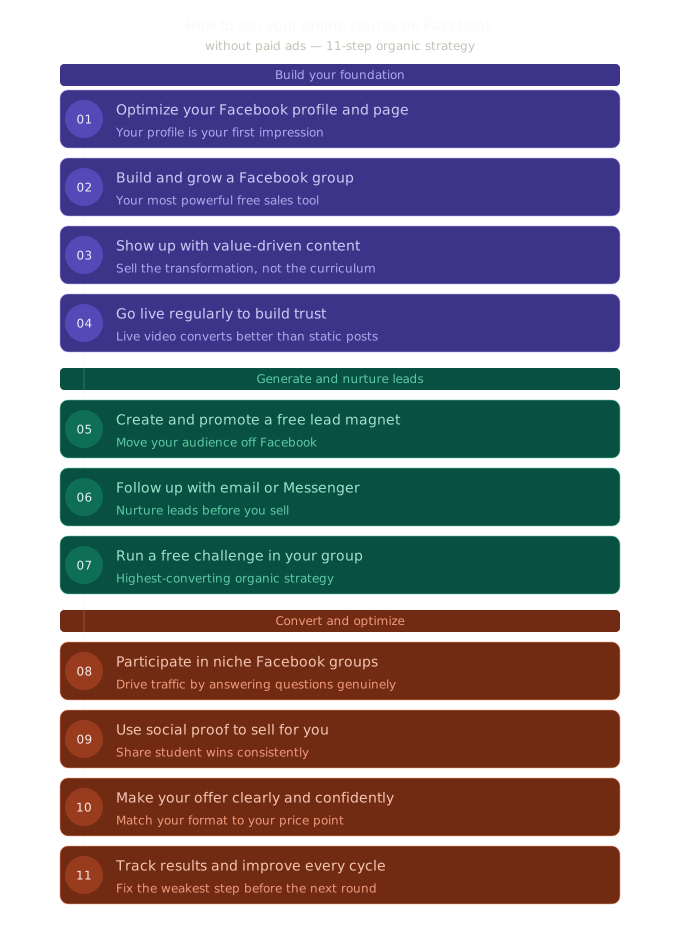
This guide walks you through how to sell your courses on Facebook without ads.
If you are a course creator who is just getting started, working with a limited budget, or simply want to build an organic sales system before layering in paid traffic, this guide is for you.
TL;DR
- Before selling your course on Facebook, have your course, landing page, Facebook profile, and lead magnet ready.
- Build a Facebook Group around your niche and show up consistently with value-driven content that ties back to the transformation your course delivers.
- Go live regularly, run a free challenge, and participate in niche groups to build trust and drive traffic without spending on ads.
- Capture leads with a free resource and follow up through a nurture sequence that delivers value before introducing your course offer.
- Use student testimonials and wins as a regular part of your content so social proof is working for you even between launches.
- When you are ready to sell, make your offer clearly, match your format to your price point, and follow up personally with anyone who showed interest but did not enroll.
- After each launch cycle, review your numbers, find the weakest step in your funnel, and improve it before the next round.
Before You Start Selling Your Course on Facebook
Before you start selling your course on Facebook, make sure these are in place:
- Have a course ready to sell: Your course doesn’t need to be 100% complete, but you should at least have a clear curriculum and your core content outlined.
- Pick a course hosting platform: Choose where your course will live. You can either choose online course platforms like Klasio, Teachable, Kajabi, Thinkific, etc. Or, you can choose a course marketplace like Udemy.
- Build a Course Sales Page: Your course sales page is where the actual selling happens, so this needs to be ready before you drive any traffic.
- Define your niche and ideal student: Know exactly who you are selling to and what specific outcome your course delivers.
- Set your pricing: Decide on your course’s price point before you start promoting.
Once all of these are in order, you are ready to start building your presence on Facebook.
Step 1: Optimize Your Facebook Profile & Page for Selling
Before you start creating content or promoting your course, your Facebook profile and page need to be set up in a way that makes sense to a first-time visitor. When someone comes across your content and clicks on your profile, they should immediately understand what you do, who you help, and where to go next.
Here’s how to set up and optimize your Facebook profile and page:
Start with your personal profile
A lot of course creators overlook this, but your personal profile still gets traffic, especially when you are active in Facebook Groups or commenting on posts.
To optimize your personal Facebook profile, update your bio to describe what you do and who you help clearly. Mention your course topic or niche directly in your bio. Also, add a link to your landing page or free lead magnet in your intro section so anyone who lands on your profile has somewhere to go.
Apart from your bio, your profile photo should be a clear, well-lit headshot. People buy from people, and a recognizable face builds familiarity over time. Your cover photo should reinforce your brand or highlight your course offer with a simple visual and a short line of copy.
Set up or clean up your Facebook Business Page
If you plan to run ads later or want to separate your personal content from your course business, a Facebook Business Page is worth having.
While setting up a Facebook business page, fill out every section completely, including your page category, description, website link, and contact details.
When you are providing your information, keep in mind that your page description should explain your niche, the outcome you help students achieve, and the type of content you post.
Add a CTA button to your Page
Facebook lets you add a button just below your cover photo. Use this to send visitors directly to your landing page or lead magnet opt-in. Set it to “Sign Up” or “Learn More” depending on what action you want them to take.
This CTA button is one of the few places on your page where you can send people off Facebook without them having to look for a link.
Pin a post to the top of your Page
Your pinned post is the first piece of content a visitor sees when they land on your Facebook page. Use it to introduce yourself, explain who you help, and point people to your free resource or course.
Keep the pinned post conversational and end with a clear next step. Update it whenever you are running a promotion or launching a new cohort.
Make sure your contact and messaging settings are open
If potential students want to reach out with questions, they should be able to do so easily. Enable Messenger on your page and respond promptly. A quick response builds trust and can move a warm lead closer to a purchase.
Once your profile and page are set up properly, everything you post from this point forward will carry more weight because visitors will have the context they need to understand your offer and take action.
Step 2: Build and Grow a Facebook Group Around Your Niche
A Facebook Group is one of the most effective organic tools available to course creators. Unlike a Business Page, where your posts often get limited reach, a Group creates a community space where members get notified, conversations happen, and trust builds over time.
Your goal here is to create a free community around the topic your course teaches, so that the people who join are already interested in what you are eventually going to sell.
Here’s how to build and grow a Facebook group:
Create your group with a clear focus
Your group name should reflect your niche and ideally speak directly to your target student. A name like “Online Business for Freelancers” or “Weight Loss After 40 for Women” tells the right people they are in the right place.
Avoid vague names that could mean anything. The more specific your group name is, the easier it is for the right people to find it and decide to join.
Once you fix a very specific group name, write a thorough group description that explains who the group is for, what members will get out of it, and what kind of content gets posted. This description also helps Facebook surface your group in search results when people look up topics related to your niche.
Remember to set your group’s privacy depending on your strategy. A public group is easier to grow because posts are visible in search, and anyone can see the content before joining.
On the other hand, a private group feels more exclusive and tends to have higher engagement because members feel they are part of something curated. Many course creators use a private group to create a sense of community while still allowing anyone to request membership.
Use membership questions strategically
When someone requests to join, Facebook allows you to ask up to three questions. Use these to learn about your members and to qualify them as potential students.
Use these membership questions to ask about their biggest challenge related to your course topic, their experience level, or what they are hoping to get from the group.
You can also include a question asking for their email address, which gives you a way to follow up outside of Facebook. Make it optional, but frame it as a way to send them a free resource.
Create a welcome post that sets the tone
Pin a welcome post at the top of your group that introduces you, explains what the group is about, and tells new members what to do first. This could be answering a question, introducing themselves in the comments, or grabbing your free lead magnet.
A good welcome post makes new members feel oriented and gives them an immediate reason to engage.
Post consistently before you start promoting anything
When new members join your group, the first thing they do is scroll through recent posts to decide if the group is worth staying in. If your feed is thin or the last post was weeks ago, they will disengage immediately.
Before you invite people or run any promotion, make sure your group already has enough content to look active and valuable. Aim for at least two to three posts per week covering tips, questions, and discussions related to your niche.
How to grow your Facebook group organically
To grow your Facebook group organically, start by inviting your existing Facebook friends who fit your target audience. Also, to make the group more accessible to them, you can share your group link on your personal profile and Business Page.
If you are active in other Facebook Groups in your niche, mention your group when it is relevant and allowed by the group rules. You can also promote your group as part of your lead magnet delivery, so that people who download your free resource get directed to the group as a next step.
Collaborating with other course creators in complementary niches is another way to grow. It could be a guest post, a joint live session, or a simple shoutout between two group owners that can bring in a batch of new members who are already interested in related topics.
Keep engagement going
Reach out to new members personally through Messenger with a short welcome message when they join. Ask them what brought them to the group or what they are currently working on. This kind of one-on-one interaction builds the kind of trust that eventually converts into course sales.
Also, don’t forget to respond to every comment in your posts, especially in the early stages. When members see that the group owner is active and responsive, they are more likely to keep showing up.
Moreover, post a mix of content that educates, invites discussion, and occasionally highlights wins from members. When someone shares a result or asks a question that others can relate to, engage with it visibly. That kind of interaction signals to the rest of the group that this is an active, worthwhile space.
Avoid turning your group into a sales channel too early
The purpose of the group at this stage is to build an engaged audience around your niche. Members should be getting real value from the community before you introduce your course.
A group that feels like a constant sales pitch loses members quickly and damages the trust you are trying to build. Focus on serving the group first, and the selling will follow naturally once the relationship is established.

Step 3: Show Up Consistently With Value-Driven Content
Once your group is set up and has some initial members, your main job becomes showing up regularly with content that is genuinely useful to your audience. This is what builds your authority over time and keeps your community engaged long enough to eventually become buyers.
Consistently posting in your Facebook group does not mean posting every single day without a plan. What we mean is showing up often and with enough substance that your audience starts to associate you with the topic your course covers.
Here are some tips to help you post consistently in your Facebook group:
Lead with the transformation
One of the most common mistakes course creators make is posting content that talks about their course modules and lessons. Your audience does not care about your course structure. What they care about is the result they want to achieve.
Every piece of content you create should connect back to the value your students will receive. For example, if your course teaches freelancers how to get clients, your content should help people take steps toward getting clients.
Use a content mix that serves different purposes
Rotating between different types of posts keeps your feed from feeling repetitive and helps you reach members at different stages of awareness. Here are the main content types worth using regularly:
- Educational posts share a specific tip, framework, or process related to your niche
- Personal story posts share your own experience with the problem your course solves
- Social proof posts highlight student results, testimonials, or case studies. If someone in your group shares a win, celebrate it publicly
- Engagement posts invite your audience to participate rather than just consume
Remember to post at least two to three times per week. This is enough to stay visible and build momentum without burning out.
If you can post more, make sure the quality stays consistent. A lower volume of genuinely useful posts will always perform better than a high volume of filler content.
Also, plan your posts in advance if you can, even loosely, so you are never scrambling for ideas at the last minute.
Use Facebook Stories to stay visible between posts
Stories sit at the top of the feed and are a low-pressure way to show up daily without the effort of a full post. Use them for behind-the-scenes content, quick tips, polls, or reminders about something you posted in the group. Because Stories disappear after 24 hours, they feel more casual and spontaneous, which works in your favor when you want to build familiarity with your audience.
Use Facebook Reels to reach people outside your group
Reels are short-form videos that Facebook actively pushes to non-followers, which makes them one of the few organic formats that can introduce you to a cold audience.
To post Facebook reels, you do not need professional equipment or editing skills. A short video where you share one useful tip, answer a common question, or address a misconception in your niche is enough. End each Reel with a soft call to action that points viewers toward your group or free lead magnet.
Repurpose your content across formats
Content repurposing can be a great way to post consistently without creating new content. A detailed post in your group can be trimmed into a Facebook story. A story can become a full post. A question you answer in the comments can be turned into a Reel.
Working this way means you are getting more mileage out of ideas you have already developed rather than constantly generating new ones from scratch.
Also read: Best tools for content repurposing
Write for one person, not a crowd
When you sit down to write a post, picture your ideal student specifically. Think about where they are right now, what they are struggling with, and what would actually help them move forward.
Facebook posts written with one person in mind tend to feel more direct and personal, which makes it more likely to resonate with the people reading it.
Track which content performs and adjust
Pay attention to which posts get the most comments, shares, and saves. These signals tell you what your audience finds most relevant.
Over time, you will start to notice patterns, certain topics, formats, or angles that consistently generate more engagement than others. Double down on what works and quietly move away from what does not.
You do not need analytics tools for this at the organic stage. Simply observing which posts get a response and which ones get ignored is enough information to guide your content direction.
Step 4: Go Live Regularly to Build Trust and Authority
Of all the content formats available on Facebook, going live is the one that builds trust the fastest. When your audience watches you teach or speak in real time, without edits or filters, they get a much clearer sense of who you are and whether they want to learn from you.
The familiarity your students get from you going live is difficult to build through text posts alone. It is one of the main reasons live video tends to convert better than almost any other organic format when it comes to selling a course.
Here are the things to keep in mind before going live on Facebook:
Decide on a format that works for you
There is no single right way to structure a Facebook Live. What matters is that you show up with a clear purpose each time so that your audience knows what they are getting. For example:
- You can teach sessions where you walk through one specific concept, framework, or process related to your course topic. Keep these focused on a single idea rather than trying to cover everything at once. A 20 to 30-minute live on one topic will hold attention better than an hour-long session that jumps around.
- You can also arrange Q&A sessions where you invite your group members to ask questions about your niche, and you answer them live. These are easy to run because your audience drives the content, and they signal that you are accessible and knowledgeable. Just make sure to announce the Q&A a day or two in advance so members can prepare questions.
- On top of that, you can share behind-the-scenes sessions where you share what you are currently working on, a recent lesson you learned, or a look at your own process.
- If you can, invite a student and have a conversation about their results or transformation. You can also share your own experience or highlight a student’s journey. Showing a clear before-and-after scenario in your niche helps demonstrate what is possible for your audience.
While preparing for the live session, prepare enough to be focused, but not so much that it feels scripted. You do not need a word-for-word script, but you should go into every live with a clear outline.
You should know your opening, the main point you are covering, and how you plan to wrap up. Without that structure, it is easy to ramble or lose your train of thought, which can make the session feel disorganized.
At the same time, over-scripting kills the natural, conversational energy that makes live video feel authentic.
Start even when the audience is small
If you think your Facebook live will only be watched by three people, you might feel like you shouldn’t go live. This is one of the biggest mental hurdles for course creators who are just getting started with live video.
Waiting until you have a large audience before going live means you never build the habit or the skill. People who watch the replay a couple of weeks later will not know how many were watching in real time. Go live consistently, and your audience will grow over time as your content gets seen and shared.
Now, when you start a live session, give it a minute or two before diving into the main content. This allows latecomers to join and gives you a moment to welcome the people who are already there.
Make sure to acknowledge viewers by name when they comment. This small gesture makes people feel seen and encourages others to comment as well.
Structure your Facebook Live to lead toward your course
You do not need to make a hard pitch every time you go live. In fact, doing so too frequently will train your audience to tune out whenever you mention your offer.
A more sustainable approach is to teach something genuinely useful during the live and then mention your free lead magnet or course as a logical next step at the end.
For example, if your live covered three steps for landing freelance clients, you could close by saying that your free checklist covers five more steps and drop the link in the comments.
Go live consistently, even if it is just once a week
When your audience sees you live regularly, you become a familiar presence in their feed and in their week. One focused live session per week is enough to build momentum. If you can do two, even better.
What matters more than frequency, though, is showing up reliably. A predictable schedule, even once a week on the same day, trains your audience to expect you and show up for it.
Repurpose your live videos after the session ends
Once the live is over, the recording stays on Facebook and continues to get views over time. Share the replay in your group with a short description of what was covered.
You can also download the recording and repurpose it as a shorter clip for Reels, break it into written tips for future posts, or upload it to YouTube if you want to extend your reach beyond Facebook.
A single live session can generate several pieces of content when you approach it this way.
Step 5: Create and Promote a Free Lead Magnet
At some point in your organic strategy, you need a way to move people off Facebook and into a communication channel you actually own.
Your Facebook Group can be taken down, your organic reach can drop, and your posts can stop showing up in the feed for reasons outside your control. A lead magnet solves this problem by giving your audience a reason to hand over their email address or connect with you on Messenger. So that you can follow up with them directly, regardless of what happens on the platform.
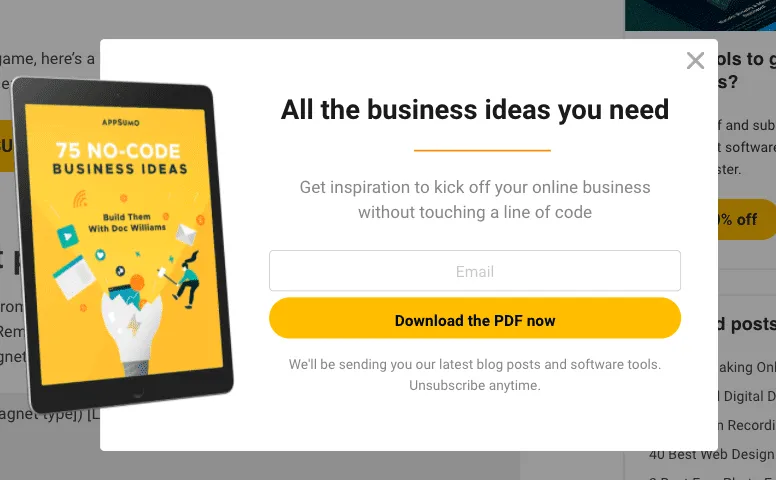
If you don’t already know, a lead magnet is a free resource you offer in exchange for contact information. For course creators, it also serves a second purpose: it gives potential students a small taste of what you teach, which builds credibility and warms them up toward your paid offer before you ever mention it.
Before you start creating a lead magnet, choose a lead magnet format that matches your topic and audience. The best lead magnet is one that solves a specific, immediate problem for your ideal student and can be consumed quickly. It should be closely related to what your course teaches so that the people who opt in are already interested in going deeper. Some formats that work well for course creators include:
- A checklist or quick-start guide that walks someone through a specific process step by step. These are easy to create, easy to consume, and work well for audiences who prefer a clear action plan over long-form reading.
- A short video training or mini lesson that teaches one focused concept from your course topic. Video lead magnets tend to perform well because they let your audience experience your teaching style before committing to a paid course.
- A mini email course delivered over three to five days that covers the basics of your topic. This format keeps your audience engaged over several days, which gives you multiple touchpoints before you introduce your paid offer.
- A template or swipe file that your audience can use directly, such as a script, a content calendar, or a sample framework. These work especially well when your course teaches a skill that involves repeated execution.
- A free challenge run inside your Facebook Group over three to five days. Challenges are slightly more involved to run than a static download, but they generate high engagement and create a natural moment to present your course at the end.
Whatever format you choose, make sure the lead magnet delivers on its promise. A free resource that feels thin or rushed reflects poorly on the quality of your paid course.
Create a dedicated opt-in page for your lead magnet
Your lead magnet needs its own landing page with a short headline that states exactly what the resource is and what the person will be able to do after using it.
While creating the sales page for the lead magnet, make sure to keep the page simple. A headline, a brief description, a short list of what is included, and an email opt-in form are enough.
Also, avoid cluttering the page with too much information. The goal is to get the visitor to submit their email, not to explain your entire content strategy.
If you are using Messenger as your lead capture method instead of email, tools like ManyChat allow you to set up a simple flow where someone comments a keyword on your post and automatically receives the lead magnet via Messenger. This is a lower-friction option for some audiences and tends to get higher opt-in rates because it does not require leaving Facebook.
Promote your lead magnet consistently across your Facebook presence
Creating the resource is only half of the work. You need to actively and repeatedly put it in front of your audience for it to generate leads at any meaningful volume. Here are the main places to promote it:
- Pin a post about your lead magnet at the top of your Facebook Group. New members who join your group will see this immediately.
- Mention it in your group posts regularly. At the end of an educational post, you can add a line inviting people to grab your free resource if they want to go deeper on the topic.
- Promote it during your Facebook Lives. At the end of each live session, mention your lead magnet and drop the link in the comments.
- Share your lead magnet in Stories a few times per week. Because Stories are seen separately from the main feed, this reaches people who may have scrolled past your posts without seeing them.
- Post about your lead magnet on your personal profile occasionally. Especially if you have connections who fit your target audience.
- Mention your lead magnet when you post in other Facebook Groups.
Step 6: Follow Up With Email or Messenger to Nurture Leads
Getting someone to opt in to your lead magnet is a good sign, but it is not a sale. Most people who download your free resource are not ready to buy your course the moment they receive it. They need more exposure to your teaching, more evidence that your approach works, and enough context about your course to feel confident making a purchase. That is what a nurture sequence is for.
A nurture sequence is a series of emails or Messenger messages sent automatically after someone opts in. Its job is to continue the relationship that your lead magnet started, address the doubts your potential students are likely carrying, and move them toward a buying decision at a natural pace. Done well, it feels like a helpful continuation of the value you have already been delivering, not a sales push.
Here’s how to execute a nurture sequence for your
Choose your follow-up channel based on where your leads came from
If you collected email addresses through an opt-in page, your nurture sequence runs through an email marketing platform. If you used a Messenger flow through a tool like ManyChat to deliver your lead magnet, your follow-up happens inside Messenger.
Some course creators use both, capturing leads through Messenger for immediate engagement and then moving them to email for longer-term nurturing. Either channel works, but email gives you more control and ownership over your list in the long run.
Deliver the lead magnet immediately
The first message in your nurture sequence should arrive the moment someone opts in. This message delivers the free resource and sets expectations for what is coming next.
While writing this first message, make sure to keep it short. For starters, you can thank them for signing up, give them the link or access to the lead magnet, and let them know you will be sending a few more useful messages over the coming days.
A slow or missing delivery creates a bad first impression and increases the chance that your follow-up messages get ignored.
Structure your sequence around value first, offer second
A common mistake course creators make is introducing their paid course too early in the sequence. If the second message someone receives from you is a sales pitch, you have not given them enough reason to trust you yet.
The sequence should spend the first few messages continuing to teach and build credibility before transitioning into a course offer. A simple structure that works well looks like this:
- Message 1: Send the free resource immediately and give a brief preview of what the next few messages will cover.
- Message 2: Deliver one useful lesson or tip. Pick something directly related to your course topic that helps your subscriber make a small amount of progress.
- Message 3: Address a common objection or misconception related to your course topic.
- Message 4: Share a student result or case study.
- Message 5: Introduce your course offer.
- Message 6: Follow up on the offer. Send a reminder to anyone who clicked your sales page link but did not enroll.
This is a basic sequence structure. You can expand it with more value-driven messages between the case study and the offer if your course is higher priced and requires a longer nurture period.
Write your messages the way you would write to a single person
Email sequences that feel like newsletters or announcements tend to get lower engagement than ones that feel like a direct conversation.
Use the subscriber’s first name if your platform supports it. Write in a conversational tone. Also, avoid overly formal language or marketing speak. Each message should feel like it was written specifically for the person reading it, even though it is automated.
Keep your messages focused on one idea each
Emails or Messenger messages that cover multiple topics at once dilute the impact of each point and make it harder for the reader to know what action to take. One message, one idea, one call to action. This applies especially to the messages where you are making or following up on your course offer.
Pay attention to your open rates and click rates
Open and click rates tell you how well your sequence is performing at each stage. A low open rate on the first message suggests a weak subject line or a deliverability issue. A low click rate on your offer message suggests the email body is not doing enough to motivate action, or the offer itself needs clarification.
Most email platforms show you these numbers at the sequence level, so you can identify exactly where people are dropping off and improve those specific messages.
Re-engage leads who did not buy after the initial sequence
Not everyone who goes through your nurture sequence will be ready to buy by the time your offer message arrives. Some people need more time. Others get busy and stop opening emails for a while.
Set up a separate segment or tag in your email platform for subscribers who went through the full sequence but did not purchase.
You can follow up with this group during a future launch, when you add new content to your course, or when you run a promotional offer.
A lead who did not buy immediately is not a lost lead; they just need more time or a different reason to act.
Also read: Email marketing for course creators
Step 7: Run a Free Challenge or Mini-Series Inside Your Group
A free challenge is one of the highest-converting organic strategies for course creators, and it works particularly well on Facebook because the Group format is built for structured, time-bound community experiences.
The idea is straightforward: you run a focused, multi-day event where members work toward a specific outcome together, and at the end, you present your course as the natural next step.
Choose a focused challenge topic
The topic of the challenge should solve a specific problem for your ideal student while stopping short of delivering everything your course covers. Think of it as teaching enough to create a quick win, which builds appetite for the deeper transformation your course provides.
Avoid broad topics like “Transform Your Business in 5 Days.” Something like “Book Your First Paying Client in 5 Days” is specific enough that the right people immediately know if it is for them.
Keep it between three and five days
Three days is enough to deliver real value without asking too much of your audience. Five days is the most common format and balances depth with completion rates well. Longer challenges risk losing participants before you ever get to your offer.
Plan all your content before the challenge begins
Each day should have a clear theme, a lesson, and a specific task for participants to complete. A simple daily rhythm that works well is: post a short video or written lesson, assign a task based on that lesson, then close the day with a prompt asking participants to share their progress in the comments. Map this out fully in advance so you are not creating content in real time while also managing group engagement.
Collect email addresses when people sign up
Create a dedicated opt-in page for the challenge so you are collecting email addresses from participants rather than just having people comment on a post. This gives you a list of warm leads you can follow up with.
Throughout the event, post your daily content at the same time each day, respond to comments, call out participants by name when they share progress, and acknowledge effort even when results are incomplete.
Go live at least once to answer questions and keep momentum going, because your visibility during the challenge directly affects how engaged participants will be.
On the final day, deliver your strongest content, acknowledge what the group accomplished, and frame your course as the logical continuation of what participants just experienced.
Give a clear enrollment window of a few days, so there is a reason to act soon. After the challenge ends, send a message to everyone who opted in, including those who were not active in the group, summarize what was covered, and give them a direct link to enroll. Some of your best buyers will come from this follow-up.
Once you have run a challenge that converts well, run it again. The same format can be repeated each quarter with a new audience, making it one of the most efficient repeatable launch strategies in an organic sales system.
Step 8: Participate in Niche Facebook Groups to Drive Free Traffic
Facebook Groups in your niche are already full of your ideal students. These are people who are actively seeking information, asking questions, and looking for solutions related to your course topic.
Consistently participating in these groups is one of the most direct ways to get in front of a relevant audience without spending on ads. Here’s how to take advantage of other groups in your niche:
Find the right groups to join
Search for groups related to your niche using keywords your ideal student would use. Look for active groups with sizeable memberships and posts that generate genuine engagement.
A group with 50,000 members but very little activity is less useful than a group with 5,000 members where people are posting and commenting daily. Join five to ten groups and observe them for a few days before participating to understand the culture, the common questions, and the rules around self-promotion.
Lead with genuine helpfulness
Your goal in these groups is to become a recognizable, trusted voice on your topic. Answer questions thoroughly, share useful perspectives, and contribute to discussions without immediately pointing people to your content.
When someone posts a question that your course topic addresses, write a real answer in the comments. Do not just drop a link and leave. A detailed, helpful response builds your reputation far more than a promotional comment ever will.
Over time, as people see your name consistently attached to useful answers, some of them will click on your profile out of curiosity. This is why your personal profile needs to be optimized, as covered in Step 1. Your profile is where a curious stranger becomes a warm lead.
Mention your free resource only when it is genuinely relevant
Most groups have rules against direct promotion, but many allow you to reference a free resource when it directly answers what someone is asking.
If someone asks a question that your lead magnet addresses specifically, you can answer their question in the comments. Then mention that you have a free resource that goes deeper, if they are interested. This approach feels helpful rather than promotional because it is helpful rather than promotional.
Be consistent rather than sporadic
Showing up in these groups once a week will not build much momentum. Set aside a small amount of time each day to scan your target groups, answer a question or two, and engage with relevant posts. The compounding effect of consistent participation over several weeks is what builds your visibility and drives a steady stream of profile visits and group join requests.
Step 9: Use Social Proof to Sell for You
Social proof addresses one of the core doubts every potential student carries, which is whether your course actually delivers results for people like them. The more specifically you can answer that question through evidence, the lower the barrier to enrollment becomes.
Here’s how to use social proof:
- Reach out to past students directly and ask specific questions about their situation before the course, what changed, and what result they are most happy with.
- If you are pre-launch, offer a small group of people free or discounted access in exchange for honest feedback and a testimonial.
- When a student shares a result, ask for permission to post it publicly with enough context that other members can see themselves in the same situation.
- Make sharing student wins a regular part of your content schedule, not something you only do during a launch.
- Screenshot meaningful comments and DMs and share them periodically with permission, as informal testimonials can be just as persuasive as formal ones.
- Pin a post in your Facebook Group that collects your best testimonials in one place, so potential students can find social proof without having to search for it.
Step 10: Make Your Offer Clearly and Confidently
After weeks of building your audience and delivering value, many course creators hesitate when it is time to actually sell. They soften the pitch too much or bury the details. People who have been following your content deserve a clear, direct invitation to enroll.
Here’s how to make your offer:
- Write a clear course announcement post. Explain what the course covers, who it is for, what students will be able to do after completing it, how much it costs, and how to enroll.
- Focus on the outcome and transformation rather than the module list. Pin this post to the top of your group for the duration of your enrollment window.
- Match your offer format to your price point. Lower-priced courses can go straight to a checkout page. Higher-priced courses usually need a webinar or discovery call where you can address questions and objections before asking for the sale.
- Create a short enrollment window. A course that is always available gives people a reason to wait.
Step 11: Track Results and Improve Every Cycle
Use the four-week cycle as your baseline framework.
- Week 1: Publish three to five helpful posts or short videos to establish your content rhythm.
- Week 2: Promote your free lead magnet organically across your group, Stories, and personal profile.
- Week 3: Follow up with leads through your nurture sequence and present your course offer to your warm audience.
- Week 4: Review your numbers and fix the weakest step before the next cycle.
Track the metrics that matter at each stage. Group growth, lead magnet opt-in rate, email open and click rates, and enrollment numbers each correspond to a different stage of your funnel. A drop in any one of these points points to the specific step that needs attention.
Treat each launch cycle as a learning loop. Your first cycle will not be your best. The course creators who build consistent revenue from organic Facebook strategies are the ones who keep iterating rather than abandoning the approach after a single attempt.
Common Mistakes to Avoid While Selling Your Course on Facebook
Even with the right strategy in place, a few common mistakes can quietly slow down your results or stall them altogether. Most of these are easy to fix once you know what to look for.
- Selling too early: This is the most frequent mistake course creators make on Facebook. If you are pitching your course before your audience has had enough exposure to your teaching and enough reason to trust you, most people will scroll past.
- Treating your Facebook Group like a billboard: A group that only ever posts promotional content loses members fast. If the majority of your posts are about your course, your audience will disengage. The ratio should lean heavily toward value-driven content, with offers appearing occasionally and in context.
- Skipping the lead magnet: Relying entirely on Facebook to hold your audience is a risk. If your group gets flagged, your reach drops, or the algorithm changes, you lose access to the people you have been building relationships with. Collecting emails gives you a communication channel you actually own.
- Posting without a clear niche: Content that tries to speak to everyone ends up resonating with no one. If your posts are too broad or inconsistent in topic, your audience will not develop a clear sense of what you teach or who you help, which makes your course offer harder to land when you eventually make it.
- Going quiet between launches: Some course creators only show up on Facebook when they are actively selling. Their audience notices. Consistent presence between launches is what keeps your community warm and makes your next offer easier to sell.
- Ignoring follow-up: A lead who opted in to your free resource and never heard from you again is a missed opportunity. Most people need several touchpoints before they are ready to buy. If you are not following up through email or Messenger, you are leaving a significant number of potential enrollments on the table.
- Focusing on features instead of outcomes: Describing your course by the number of modules, video hours, or topics covered does not give your audience a reason to buy. What moves people is understanding what their life or work will look like after completing the course. Lead with the results your students get, and use the course details to support that claim.
- Expecting fast results: Organic Facebook strategies take time to compound. If you run your content for two weeks, get a handful of leads, and conclude that the approach does not work, you have not given it enough time to build. Consistency over several months is what separates course creators who grow steadily from those who keep restarting from zero.
Start With One Step, Then Build From There
Selling your online course on Facebook without ads is not about finding a shortcut. It is about building the kind of trust and credibility that makes people want to buy from you.
Every step in this guide works together toward that goal, from optimizing your profile and growing your group to nurturing leads and making a clear offer.
Do not try to implement everything at once. Start with your foundation. Get your profile and page in order, set up your lead magnet, and commit to showing up consistently in your group for the next 30 days.
Once that rhythm is in place, layer in the rest.




Leave a Reply