
Creating a great course is only half the job; the other half is making sure people can find it. That’s where SEO (Search Engine Optimization) comes in. By adding just a few key details, you can make your course more discoverable on Google and other search engines – helping the right learners land on your page.
Here’s how to do it in Klasio:
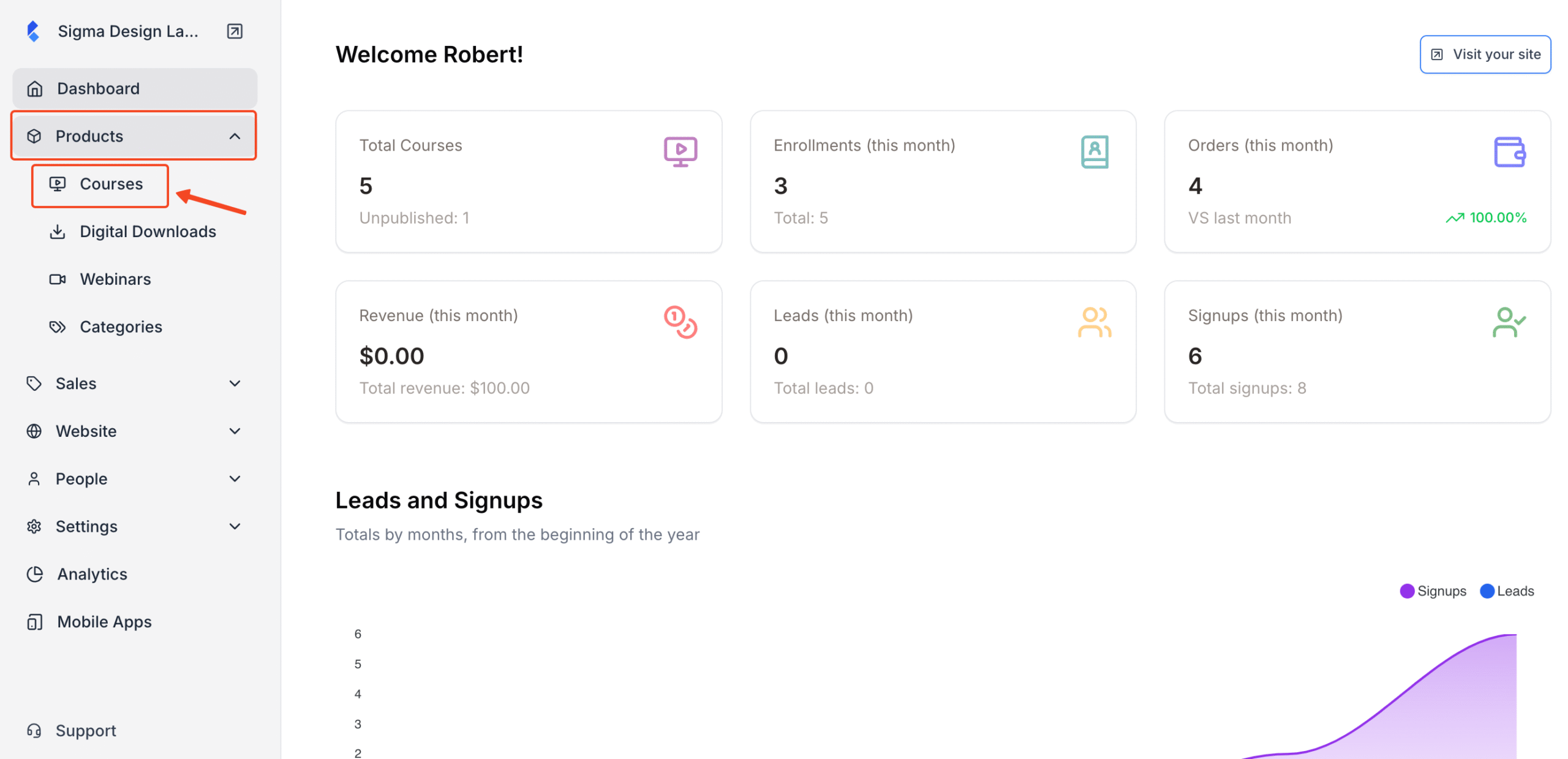
From the Admin Dashboard, expand the Products menu and click on Courses.
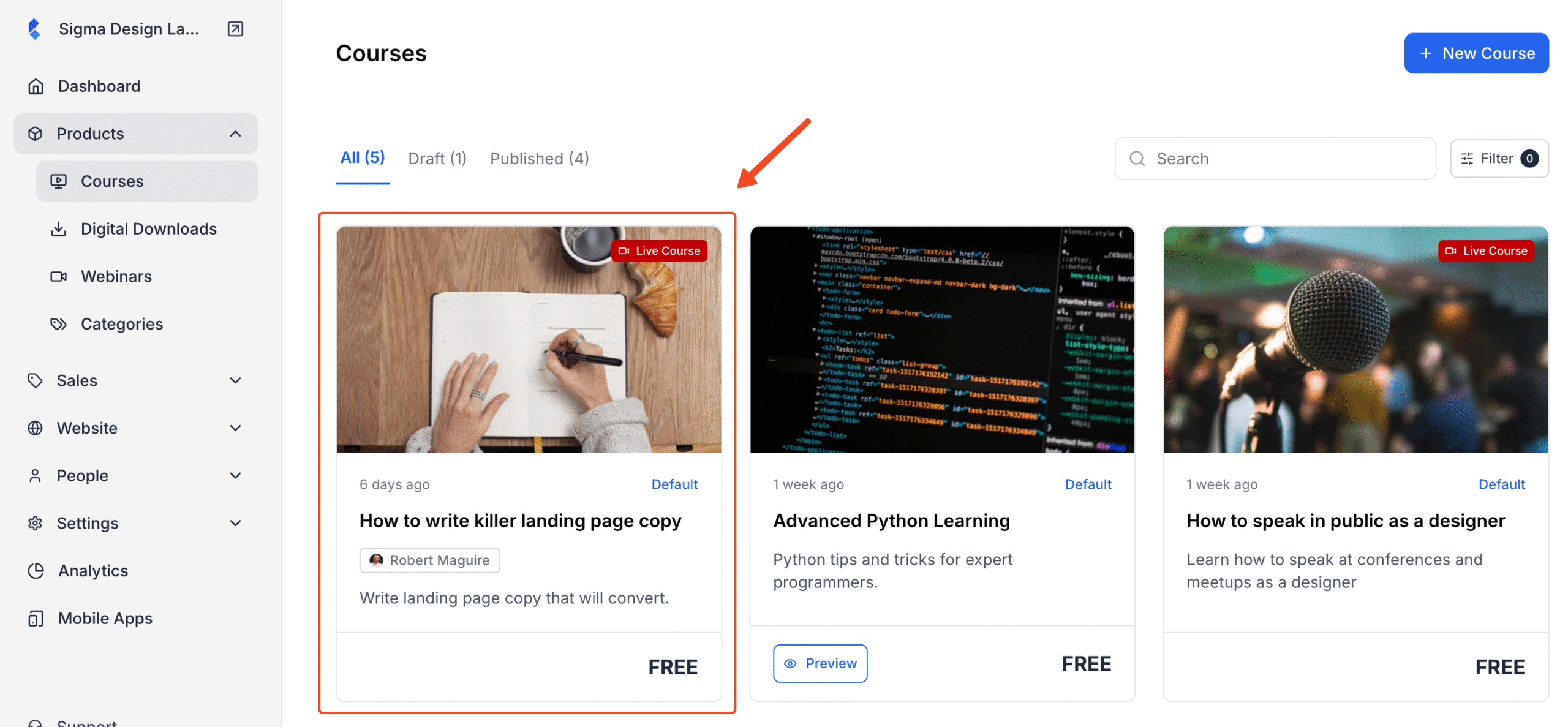
Select the course you want to optimize for SEO.
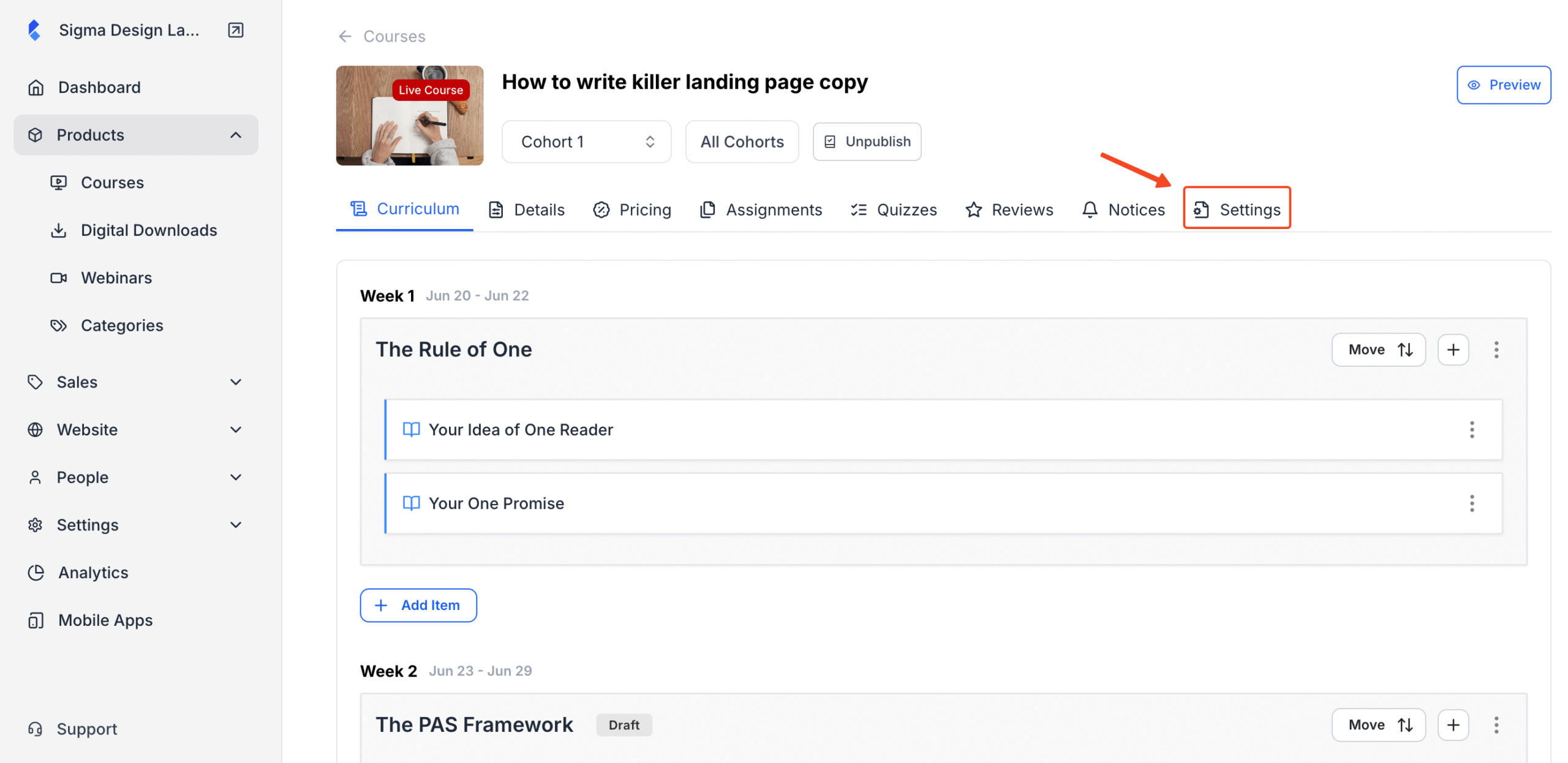
Click the Settings tab inside the course editor.
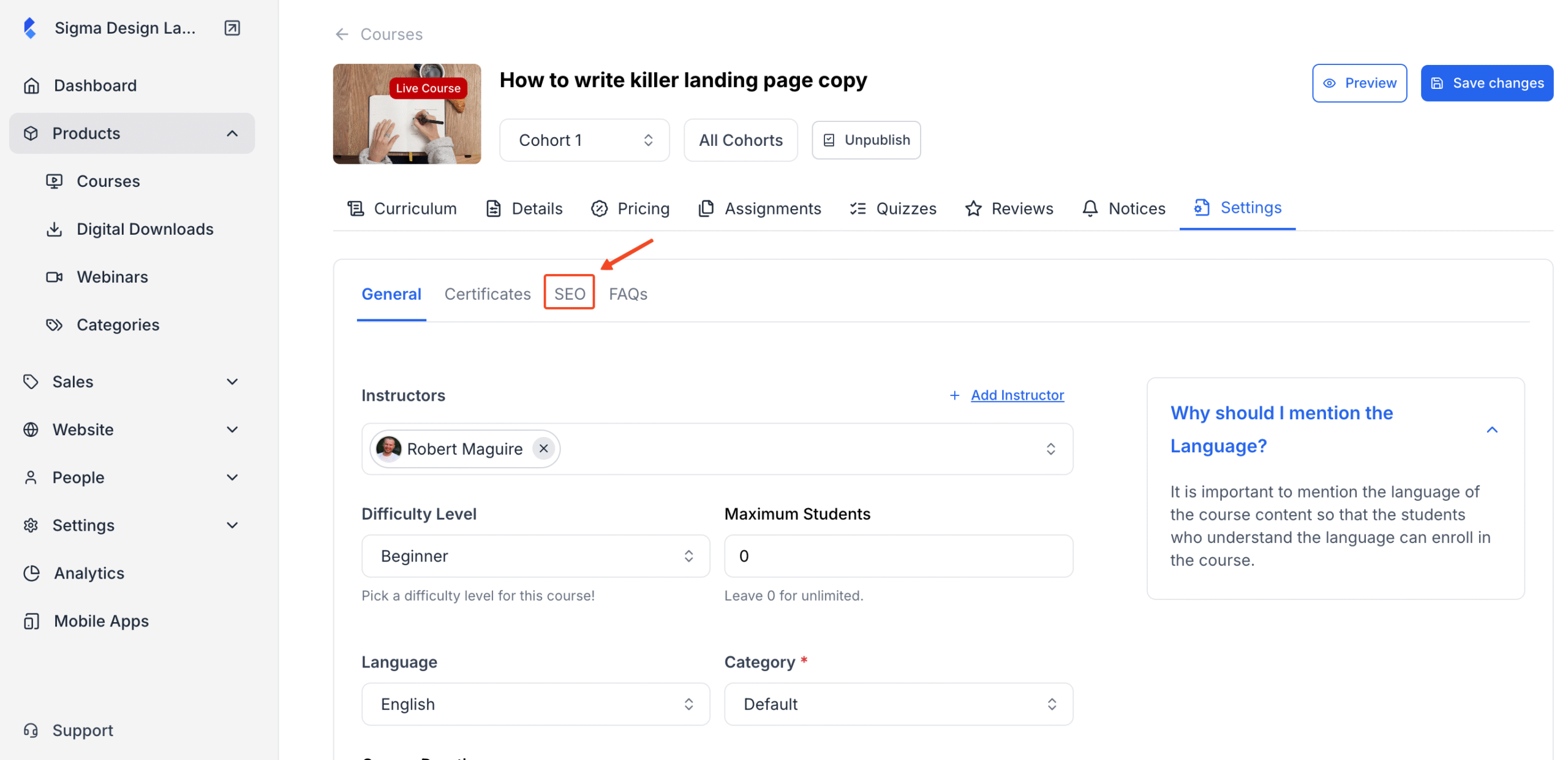
In the settings panel, find and open the SEO tab. This is where you’ll input the key details that search engines look for.
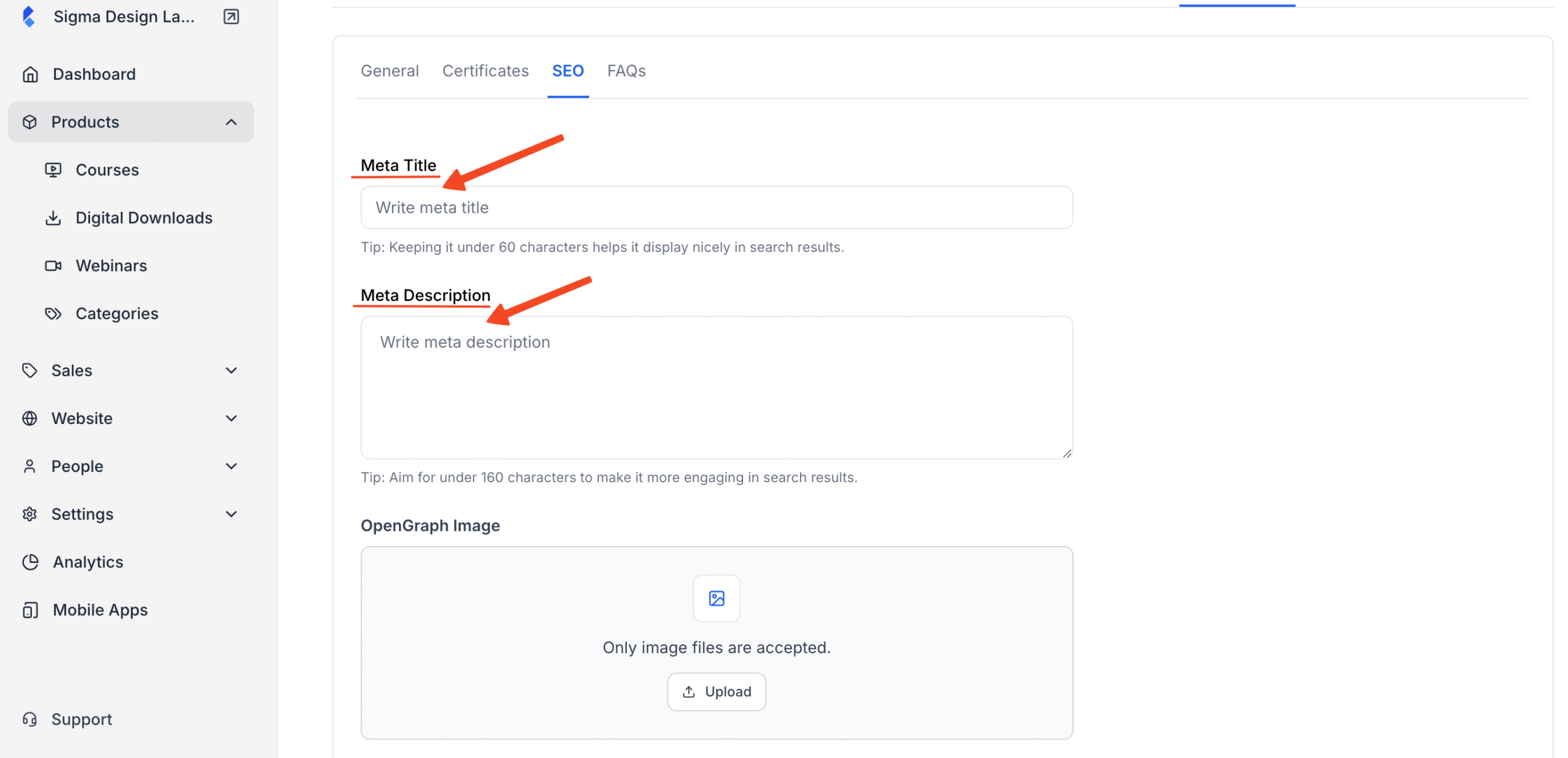
On the next screen, you will see the fields for adding the Meta Title and Meta Description.
A meta title (also called a title tag) is the headline that appears on search engine results pages (SERPs) and browser tabs. It tells both users and search engines what a page is about. It should be short, clear, and keyword-focused, usually between 50–60 characters.
For example, it could be “Copywriting Course for Beginners | Learn to Write Persuasive Copy” or “Master Copywriting Online | Professional Copywriting Training”.
On the other hand, a meta description is the short summary that appears under the title in search results. Its purpose is to convince users to click by describing what they’ll find on the page. It’s typically 150–160 characters.
For example, “Learn persuasive copywriting with step-by-step lessons, real examples, and practical exercises. Perfect for beginners who want to write copy that sells.”
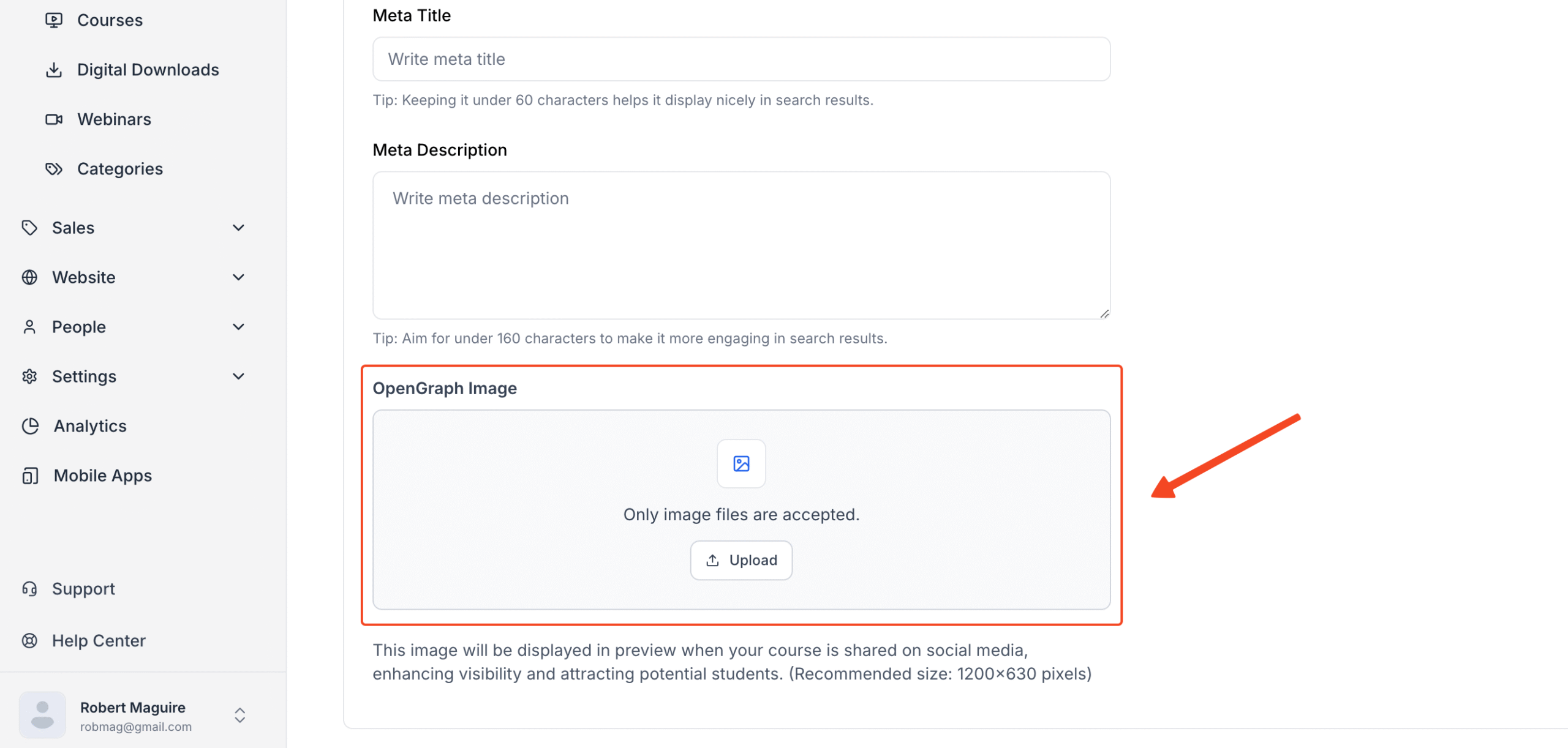
Next, upload an OpenGraph image. This image will appear as a thumbnail whenever your course link is shared on social media platforms like Facebook, LinkedIn, or WhatsApp. The recommended size is 1200×630 pixels.
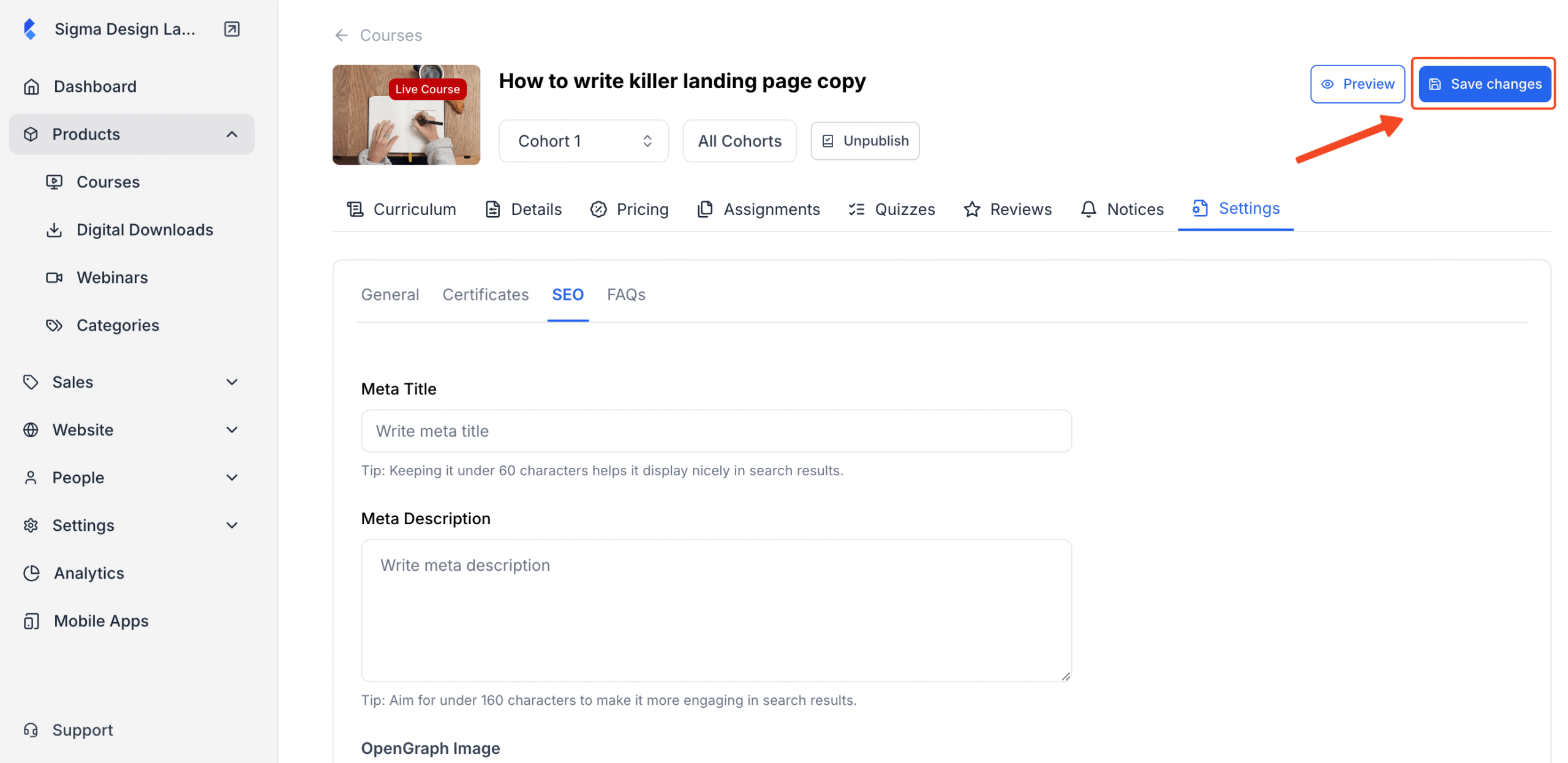
Once everything looks good, hit Save Changes and you’re done.
Your course is now optimized so that it can be easily found via search engines.